Answering the need for reliable all-in-one protection, these detectors cover smoke, heat, and sometimes carbon monoxide in a single device. This guide highlights models best suited for different homes and ensures easy installation, maintenance, and interconnection where supported. Ideal buyers include homeowners seeking easy interconnectivity, renters needing simple installs, and those prioritizing long-life batteries. Below is a quick, at-a-glance table of the selected products to compare at a glance.
| Product | Type | Power | Key Benefit |
|---|---|---|---|
| X-Sense SC07 | 10-Year Battery Combination Smoke & CO Alarm | Battery | Integrated 10-year life with photoelectric and CO sensor |
| X-Sense XP0H-SN | 10-Year Battery Combo (Smoke + CO) | Battery | UL 217 & UL 2034 certified; compact all-in-one unit |
| First Alert BRK SMI100-AC | Hardwired Smoke Alarm | Hardwired with Battery Backup | Tamper-resistant and reliable for fixed wiring setups |
| Kidde 20SD10 | Smoke Detector | 10-Year Battery | Faster smoke detection with long-life battery |
| Kidde Heat Detector | Heat Detector | Hardwired with Battery Backup | Focused protection for areas where smoke alarms aren’t ideal |
Notes: Interconnection capabilities vary by model. This article emphasizes models that mix smoke and heat detection, along with strong standalone heat or smoke options for broader coverage.
X-Sense SC07 Combined Detector

The X-Sense SC07 is a 10-year battery-powered combination detector with both smoke and carbon monoxide sensors. It is a standalone unit that does not support wireless interconnection. It is best for rooms where wiring is not feasible, such as apartments or rental homes. The device integrates a photoelectric smoke sensor with an electrochemical CO sensor for faster, more accurate alerts. A single 10-year sealed battery eliminates routine battery changes, reducing maintenance interruptions. Caution: Not suitable for interconnection with other alarms; lacks Wi-Fi or base station compatibility.
X-Sense XP0H-SN 10-Year Battery Combo
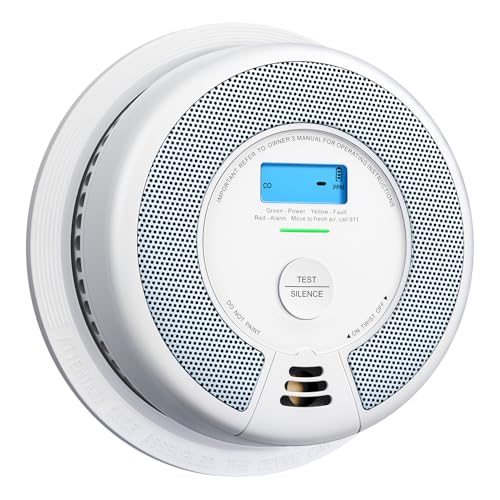
The XP0H-SN provides a 10-year sealed battery and two-in-one sensors to detect both smoke and carbon monoxide. It is designed as a standalone unit without Wi-Fi or interconnection features. It excels for homeowners who want decade-long protection without battery maintenance and do not need networked alarms. Best for personal residences where simplicity is valued. Limitation: Interconnection with other alarms is not supported in this model; consider a separate interconnect-enabled option if you need networked coverage.
First Alert BRK SMI100-AC Hardwired

This hardwired smoke detector includes a battery backup and a tamper-resistant design. It features a single button for silence and test, with an 85 dB alarm. It is best for homes with existing 120-volt electrical lines requiring reliable, continuous operation during outages. The unit is focused on smoke detection; it does not provide a built-in CO sensor. Consider adding a separate CO detector for a full safety profile in areas like kitchens or garages where CO risk exists.
Kidde 20SD10 Smoke Detector

The Kidde 20SD10 is a smoke detector with a 10-year battery and an 85 dB alarm plus LED indicators. It promises faster smoke detection and reduces false alarms with advanced sensing technology. Best for homeowners who want extended battery life and a straightforward setup. Limitations: This model emphasizes smoke detection and does not combine CO sensing in a single unit. For a combined solution, pair with a CO detector in the same area to maintain comprehensive coverage.
Kidde Heat Detector

This heat detector alerts when temperatures rise above 135°F with a loud 85 dB alarm. It is powered by a 120V hardwired supply with a 9-volt battery backup. This unit is ideal for garages, attics, or kitchens where smoke detectors may not be as effective due to cooking or dust. Best for heat-focused protection in non-smoke-prone zones. Limitation: It does not detect smoke or CO, so pair with other detectors for full-home protection.
Buying Guide: Key Purchase Considerations
What should I look for in a combined smoke and heat detector?
- Detection capabilities: Confirm the device detects both smoke and heat, or includes CO sensing if needed for your home. Consider whether you want a photoelectric sensor for smoke and an electrochemical sensor for CO.
- Power and interconnection: Decide between hardwired models with battery backup and battery-powered units. If you need networked alerts, choose interconnect-enabled devices and verify compatibility with existing systems.
- Battery life: Ten-year sealed batteries reduce maintenance, but ensure you’re comfortable with a device that cannot be easily serviced before the end of its life.
- Placement: Install detectors in sleeping areas, hallways, living rooms, and near kitchens and garages. Avoid installing directly in bathrooms or over cooking zones where nuisance alarms are common.
- Ease of maintenance: Front-access battery compartments and simple test/silence functions help keep maintenance straightforward.
Interconnected vs Standalone: What’s Right for You?
Interconnected (hardwired or wireless) units alert all alarms in the home when one detects danger, improving safety in multi-room layouts. Standalone units are simpler and often best for renters or small spaces where networked alarms aren’t feasible.
Maintenance and Lifecycle
Whole-home safety benefits from regular testing monthly and replacement after the device’s recommended lifespan. If a unit uses a sealed 10-year battery, note the install date to replace at the end of the period. Keep sensor covers clean and dust-free for accurate readings.
FAQ
- What is the difference between a smoke detector and a combination detector? A smoke detector senses smoke, while a combination detector adds additional sensors like carbon monoxide or heat to provide broader protection in one unit.
- Are hardwired detectors better than battery-powered ones? Hardwired detectors with battery backup offer continuous power during outages, whereas battery-powered units are easier to install and move between locations.
- Can I interconnect any smoke detector with others? Interconnection depends on the model. Check if the unit is interconnect-capable and compatible with existing systems before purchase.
- How long do these detectors last? Many modern detectors use 10-year sealed batteries or are hardwired with backup. Lifespan typically ranges from 8–10 years for primary units, depending on the model.
- Should I place a CO detector in every room? CO detectors should be placed in central locations outside sleeping areas and on every level if possible. Some combination detectors include CO sensing; if not, add dedicated CO alarms where needed.
- What’s the best way to test detectors? Use the test button monthly, inspect for dust, and replace units according to the manufacturer’s lifecycle guidance.