Finding an affordable UPS battery backup that protects your important devices during outages is essential for home networks, small offices, and streaming setups. This guide highlights reliable, budget-friendly standby UPS systems from trusted brands, explains how to read their specs, and compares runtimes, outlets, and protections. Use the product summaries to pick a unit that fits your power needs and budget without compromising on surge protection and orderly shutdowns during longer outages.
Summary of Selected Products
| Product | Typical Use | Outlets | Backup Power | Notes |
|---|---|---|---|---|
| Amazon Basics UPS 400VA / 255W | Home networks, IoT, small entertainment | 6 (3 battery-backup) | ~1.5–6 minutes depending on load | Compact, reliable for light loads |
| Amazon Basics UPS 600VA / 360W | Home networks, gaming, streaming | 8 (4 battery-backup) | ~2–9 minutes depending on load | Higher capacity, more outlets |
| APC BE425M | Small office, router and modem protection | 6 (4 battery-backup, 2 surge-only) | Limited battery runtime | Wall-mountable; service-replaceable battery |
| CyberPower ST425 | Home office, computers, routers | 8 (4 battery-backup, 4 surge-only) | Moderate runtime at typical loads | UL Certified, compact |
| APC BE600M1 | desk setup, USB charging, multiple devices | 7 (5 battery-backup, 2 surge-only) | Moderate runtime | USB charger port included |
Amazon Basics UPS Battery Backup & Surge Protector 400VA/255W

The 400VA/255W Amazon Basics unit offers a compact standby UPS with a total of six outlets—three surge-protected outlets and three that are surge-protected and battery-backup. It is suitable for small home networks, IoT devices, and basic media setups. On half load (200VA / 127.5W), expect around six minutes of runtime; at full load (400VA / 255W), roughly 1.5 minutes. It helps protect devices during power surges and gives enough time for a clean shutdown in short outages.
Amazon Basics UPS Battery Backup & Surge Protector 600VA/360W

This 600VA/360W UPS adds more protection and more outlets: eight total, with four battery-backup and four surge-protected/battery-backup outlets. Runtime varies by load, with roughly nine minutes at half load and about two minutes at full load. It’s well-suited for home networks, gaming consoles, and home theater gear, offering reliable power during short outages and a controlled shutdown when needed.
APC UPS Battery Backup Surge Protector BE425M

APC’s BE425M provides 425VA / 225W battery backup with six outlets, including four battery backup and two surge-only outlets. It includes a 5-foot power cord and a right-angle wall plug, plus a USB charging port. Battery replacement is serviceable by technicians rather than end-user replacement, which may affect long-term upkeep and maintenance plans for budget-conscious buyers.
CyberPower ST425 Standby UPS Battery Backup

CyberPower ST425 is a compact standby UPS with 425VA / 260W capacity and eight outlets: four battery backup and surge-protected, plus four surge-protected outlets. It uses a simulated sine wave output suitable for home offices and lightweight entertainment systems. A LED status light shows power, and the transformer-spaced outlets help accommodate bulky adapters while keeping ports accessible.
APC UPS Battery Backup & Surge Protector BE600M1
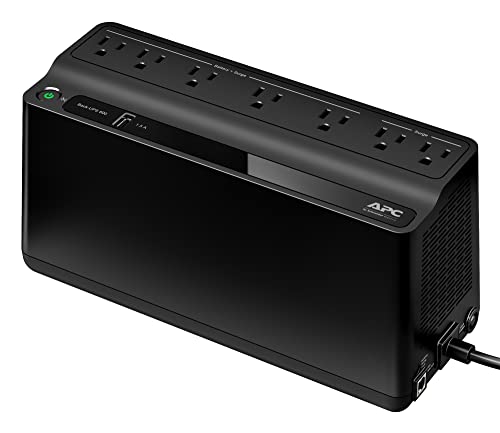
The BE600M1 provides 600VA / 330W with seven outlets: five battery backup and surge protection, plus two outlets with surge protection only and a USB charger port for mobile devices. This combination suits busy desks with multiple peripherals, including printers, modems, and computers. It balances capacity, ports, and a USB charging option for convenient on-desk power needs.
Buying Guide: Key Considerations When Choosing A Cheap UPS
- Power capacity and runtime: Match VA/W rating to your load. For typical home networks, routers, modems, and streaming devices, a 400–600VA unit is often enough. Expect shorter runtimes as you add devices, especially when all outlets are battery-backed.
- Outlet mix and layout: Look for a mix of battery-backup and surge-only outlets to support essential devices without occupying every socket with backup power. Transformer spacing helps accommodate bulky adapters.
- Battery protection: Some models offer serviceable or replaceable batteries, while others are not user-serviceable. Consider long-term maintenance if you plan to keep the unit for several years.
- Protection features: Surge protection, over-current, and over-voltage protection are standard. A USB charging port is a helpful addition for phones and small devices during outages.
- Installation and placement: Wall-mountable units save desk space and can be tucked into office corners. Ensure there is adequate ventilation to prevent overheating.
- Runtime expectations: Manufacturers provide typical runtimes at half or full load. Use these as rough estimates and consider a buffer for longer outages or higher devices loads.
- Reliability and warranty: Choose brands with established track records for consumer UPS devices and check warranty lengths and service options for battery components.
- Price-to-performance: For budgets, leaning toward 400–600VA models delivers better value, with more outlets and longer runtimes than ultra-compact options, while avoiding overkill for small setups.
Choosing a budget UPS involves balancing capacity, outlets, and how long you need power during outages. If your goal is to protect a home network, a router, modem, and a media player, a 400–600VA UPS with multiple battery-backed outlets is typically sufficient. For small offices or multimedia setups with additional devices like webcams, printers, or gaming consoles, a model with more battery-backed outlets and higher total wattage helps ensure essential equipment stays online longer.
Notes on usage: During an outage, the UPS serves as a buffer to preserve data and enable safe shutdowns. Do not rely on a budget UPS for prolonged outages without backup power plans. For critical equipment, consider periodic battery replacements or service options to prevent degraded performance over time.