Whether you’re road-tripping, commuting, or preparing for power outages, a reliable car inverter or DC-to-DC adapter helps keep laptops, phones, and small appliances running. This guide highlights five practical car adapters suitable for American drivers, with clear notes on who each product is best for and why. Use this quick reference to compare compatibility, ports, and safety features before you buy.
| Product | Best For | |
|---|---|---|
| PiSFAU 200W Car Power Inverter | Weekend travelers and office commuters needing laptop charging | Dual AC outlets, USB ports, compact design |
| NALAKUVARA 110V to 12V Converter | Vehicles needing a simple 12V output from wall outlets | Long cord reach, multiple protections |
| WYMECT USB A to 12V Converter Cable | Powering low-watt USB devices via 12V socket | USB-to-12V conversion with clear wattage |
| Suacopzar 12V 10A Car Power Adapter | Home use or travel with 12V devices under 120W | Long reach and broad device compatibility |
| ALITOVE 12V 10A Car Power Supply | Higher-demand 12V devices with safety protections | 12V 10A output, multiple protections |
Notes: The products listed here are selected for versatility, safety features, and clear output specifications. Always match wattage and device requirements to the adapter’s capacity to avoid overload.
PiSFAU 200W Car Power Inverter

Best for travelers who need a robust power convertor in a compact form. This inverter converts 12V DC to 110V AC, offering two U.S. standard outlets and four USB ports, including a USB-C fast charger. It is ideal for charging laptops, tablets, and phones during long drives. The design emphasizes quiet operation and energy efficiency, reducing heat and noise during use. A notable advantage is its portability, roughly the size of a cellphone, making it easy to store in a vehicle glove compartment or center console.
Best use scenario: short- to mid-length road trips where there’s a need to power multiple devices at once. Caution: Ensure total wattage does not exceed 200W to prevent overload. This model works well for basic laptops, tablets, and phones but may struggle with high-wattage power tools or larger appliances for extended periods.
NALAKUVARA 110V to 12V DC Converter
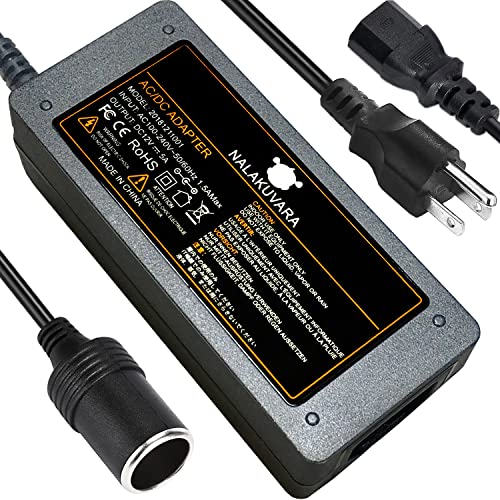
Best for users who need a straightforward 12V supply from a household outlet. This device transforms 110V–240V AC to 12V DC, suitable for devices that draw under five amps. It includes an extra-long 8.8-foot cord to reach both indoor and outdoor setups. The unit is well-suited for temporary setups such as a car police or RV fixtures, or home use when a 12V supply is needed. Caution: The output is limited to 60W, so high-wattage appliances are not supported. This is better for smaller 12V devices and low-power electronics.
WYMECT USB A Male to 12V Socket Cable
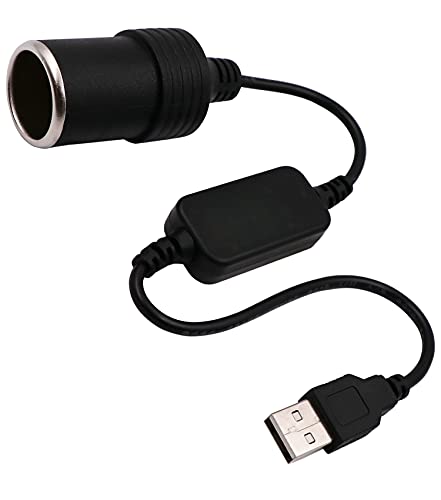
Best for devices that require conversion from USB power to a vehicle 12V socket. This cable provides a USB-A input to a 12V cigarette lighter socket, with a maximum 8W output. It is a practical solution when you want to power simple USB-powered devices via a vehicle’s 12V system. Choose this if you need a straightforward USB-to-12V conversion for small gadgets and avoid it if your device requires more than 8W or continuous high-power use.
Suacopzar 12V 10A Car Power Adapter

Best for home or travel setups needing a strong 12V supply in a compact package. It converts AC 100–240V from a wall outlet into 12V DC at up to 10A (120W). The unit features a long 254 cm (8.3 feet) power cord for flexible placement. It supports a broad range of car-powered devices under 120W, such as GPS, vacuum, refrigerators, cushions, inflators, and coolers. Caution: Continuous high-load operation near the 120W limit may shorten component life over time. This model serves well for intermittent use with mid-range 12V devices.
ALITOVE 12V 10A Car Power Supply
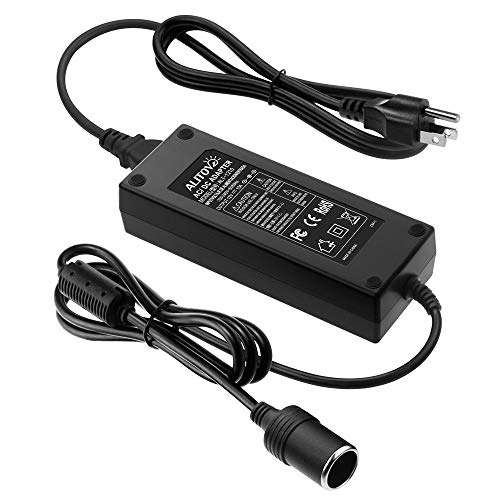
Best for users seeking a robust 12V output with strong safety protections. It delivers 12V DC at up to 10A (120W) and includes multiple built-in safeguards to guard against overload, over-voltage, over-temperature, and short circuits. An 8-foot cord helps reach a wide range of devices. This adapter is recommended for car vacuums, inline coolers, dash cams, and other 12V devices that require steady current. Caution: Long-term use near the maximum rating can affect device longevity; monitor heat and current draw during operation.
Buying Guide: Key Considerations For Car Adapters
- Power output: Match total device wattage to the adapter’s capacity. Exceeding wattage can cause overheating or fuse trips.
- Output types: Choose between AC outlets for laptops and larger devices or 12V DC outputs for smaller devices and direct car use.
- Port variety: USB-C, USB-A, and multiple USB ports support simultaneous charging of several devices.
- Safety features: Look for overload protection, short-circuit protection, over-voltage protection, and thermal cut-off.
- Cord length: Longer cords increase placement flexibility, especially in larger vehicles or RVs.
- Portability versus power: Compact units are easier to store; higher-wattage units handle more demanding equipment.
- Temperature and noise: Some designs prioritize quiet operation and efficient heat dissipation for prolonged use.
FAQ
- What is a car power inverter and when should I use one?
Inverters convert DC power from your vehicle into AC power, enabling you to run laptops, chargers, and other AC devices on the go. Use them for travel, camping, or emergencies when you need household-style outlets in a vehicle. - Is it safe to power a refrigerator or vacuum cleaner in a car?
It’s possible with an inverter or converter rated for the device’s wattage, but continuous operation near the limit can cause overheating. Always monitor temperature and ensure proper ventilation. - What wattage should I look for for general charging?
For common devices like phones and tablets, 60–120W total capacity is usually sufficient. For laptops or small appliances, aim higher but stay under the unit’s maximum rating. - Can I use a DC-to-DC adapter while driving?
Yes, DC-to-DC adapters are suitable for powering devices directly from the 12V socket, often with simple setups and good efficiency for low-wattage devices. - Do safety protections guarantee no damage to my devices?
Protections reduce risk, but you should still match device power needs to the adapter rating and avoid operating near limits for extended periods.