When safety matters most, a cable pull safety switch provides a reliable, quick way to halt equipment. This article highlights five top options, comparing their features, durability, and suitability for different environments. Use the buying guide to choose the right switch for your machinery, workshop, or industrial setting.
| Product | Brand | Key Feature | Typical Use |
|---|---|---|---|
| Telemecanique XY2CJS15 | Schneider Electric | 1 NC + 1 NO, 65.6 ft cable | Industrial machinery emergency stop |
| 1CPSA1 Cable Pull Switch | Honeywell | DPST-1NO / SPST-NC, 600V | Heavy-duty electrical installations |
| ATO Emergency Stop Rope Pull | ATO | 1NO + 1NC, IP65 | Power tools, conveyors, cranes |
| Yuecoom Single Phase Pull Switch | Yuecoom | 1NO + 1NC, 24–380V | Conveyor and crane controls |
| MECMO Breakaway Switch | MECMO | Coiled lanyard, 4 ft, 12V | Trailer and towing safety |
Telemecanique XY2CJS15 E-Stop Cable Pull Switch

The Telemecanique XY2CJS15 is a safety pull switch designed for emergency stopping of equipment. It offers 1 normally closed (NC) and 1 normally open (NO) slow-break contact pair, with a pull button reset. The design supports signaling at any point along a cable up to 65.6 feet, enhancing accessibility in industrial layouts. The unit’s robust red housing aligns with standard safety labeling, making it suitable for installation at anchor points on either side. It is ideal for factories requiring quick, visible shutdowns along long cable runs.
Honeywell S&C 1CPSA1 Cable Pull Safety Switch
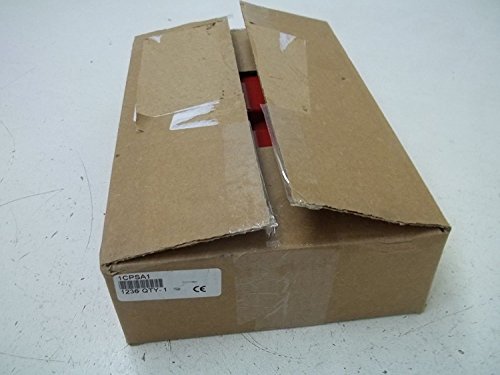
The Honeywell 1CPSA1 switch provides a rugged, safe solution for emergency stopping with configurable contact options. It supports DPST-1NO and SPST-NC configurations, with a contact current up to 10A at 600V AC and 250V DC. The device also specifies a cable span of roughly 83 meters, and RoHS compliance. This model is suited to heavy electrical installations needing reliable actuation along extended cable lengths while maintaining standard electrical safety compliance.
ATO Emergency Stop Rope Pull Switch
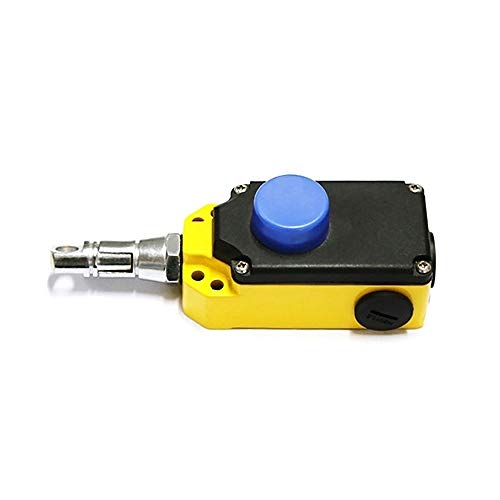
The ATO rope pull switch features 1NO and 1NC contacts with a 6A/380VAC rating and a 20±2 m maximum rope length. It includes a reset button and IP65 protection for dust and water resistance, with a claimed service life exceeding one million cycles. This model caters to power tools, conveyors, and heavy-duty equipment where a simple, effective manual stop mechanism is required and rugged protection is essential.
Single Phase Pull Switch by Yuecoom
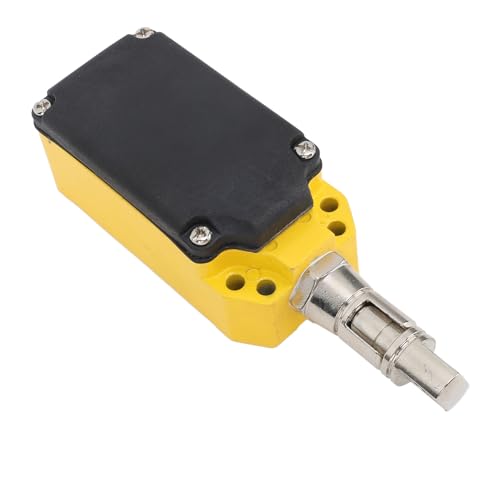
The Yuecoom single-phase pull switch emphasizes ease of operation and safety. The design allows switching by pulling a cable, with enhanced isolation to minimize electric shock risk. It is built for durability and long service life, suitable for belt conveyors and crane applications where straightforward, user-friendly control is valued. The device supports 24–380V operation, covering a broad range of industrial systems.
MECMO Trailer Breakaway Switch

The MECMO breakaway switch is designed for trailer safety. It features a 4 ft stainless steel spring towing cable with a coiled design to prevent ground drag. It includes a reinforced nylon case and metal tab for secure mounting. The product ensures that braking engages when the trailer separates from the tow vehicle, delivering a crucial safety response in RV and towing setups.
Baomain TZ-6101 Sealed Limit Switch
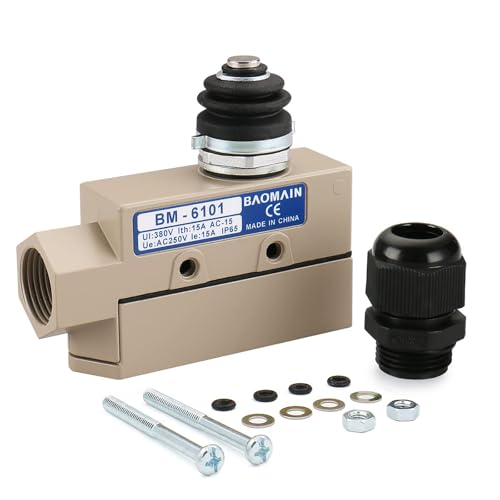
The Baomain TZ-6101 is a sealed limit switch rated at 15A/250VAC, suitable for push/pull doors and roll-up doors in various environments. IP65 protection and CE certification indicate resilience against dust and water exposure. It serves as a compatible OEM replacement in many control systems, offering reliable switching performance in demanding settings.
Edwards Signaling 6537 Switch – Pull Cord

The Edwards Signaling 6537 offers a pull cord switch with classic safety functionality. Made in the United States, it emphasizes dependable operation for home or office safety applications. The product dimensions are modest, making it suitable for integrated installations where a visible, manually activated stop is needed, and durability is a priority.
Buying Guide: Key Considerations and Comparisons
- Contact configuration: Choose 1NC/1NO or DPST/NO options based on whether you need a fail-safe circuit or a simple single-stop action.
- Voltage and current ratings: Ensure the switch supports your system voltage and the demanded current to avoid arcing or contact wear.
- Cable length and accessibility: Longer cable runs require switches that advertise signaling capability along extended distances and easier reach for operators.
- Environmental protection: Look for IP ratings (IP65 or higher) when devices operate in dusty, damp, or oily spaces.
- Durability and cycles: For frequent stopping, prioritize devices with high cycle life and rugged housings suitable for industrial environments.
- Reset and ease of use: Emergency stops should reset easily after activation; consider models with intuitive reset mechanisms.
- Installation environment: Crane, conveyor, and trailer applications may demand IP-rated units and tamper-resistant designs.
- Certification: RoHS, CE, and other safety certifications indicate compliance with regulatory standards relevant to the United States and international markets.
- Maintenance considerations: Some units offer simple replacement parts; others require more extensive servicing—factor in downtime and technician availability.
In choosing the right cable pull safety switch, consider application type, environment, and regulatory needs. For heavy industrial setups, devices with higher current ratings and longer cable reach tend to perform best. For portable or vehicle-related use, IP65 protection and rugged, quick-reset mechanisms become more critical. Compatibility with existing control systems, such as PLC inputs and signaling schemes, should guide final selection to ensure dependable integration.