Finding the right BTU gas water heater means matching heating capacity to your home’s hot water needs. The selections below focus on high-BTU, tankless gas models that deliver ample flow for multiple outlets, with practical notes on installation and best-use cases. Ideal buyers include homes with multiple bathrooms, outdoor installations, or scenarios where rapid, on-demand hot water matters most. The table summarizes the top five picks to compare at a glance.
| Product | BTU | Max GPM | Best For |
|---|---|---|---|
| NEW Rinnai RX199iN | 199,000 | 11.1 | Large homes needing simultaneous hot water |
| APUS 190,000 BTU Outdoor | 190,000 | 8.1 | Whole-house outdoor installation |
| CAMPLUX Climatech 170,000 BTU | 170,000 | 6.86 (up to 7.6) | Whole-house efficiency with multiple users |
| Rheem RTG-70XLN-3 | 160,000 | 7.0 | Outdoor installation for mid-sized homes |
| SNDOAS 85,300 BTU | 85,300 | 4.23 | Smaller homes or upgraded efficiency needs |
NEW Rinnai RX199iN Condensing Tankless Water Heater

The RX199iN is a high-capacity, condensing gas tankless unit rated up to 199,000 BTU and 11.1 GPM, suitable for homes with several simultaneous hot water demands. It supports indoor or outdoor installation with Versa Vent and can run on either natural gas or propane via Smart Sense control. A compact footprint makes it a strong choice where space is a premium. Best for: larger households or properties needing continuous hot water across multiple fixtures.
- Pros: Indoor/outdoor versatility, high flow, WiFi-ready control via Controlr module (not included).
- Limitations: Outdoor venting requires the RX-OVC cap; WiFi control requires an additional module.
Rinnai RE199eN Non-Condensing Outdoor Tankless Water Heater

This outdoor unit delivers up to 199,000 BTU with a maximum flow around 7.6 GPM, designed for outdoor installation. It uses a simpler non-condensing design and features an LED screen for service reminders and error codes. It is best for: outdoor setups where a reliable, moderate-to-high flow is needed and where WiFi control isn’t required.
- Pros: Compact, outdoor-ready with straightforward operation.
- Limitations: Non-condensing design may be less energy-efficient than condensing models.
OEVANT Outdoor Tankless Water Heater
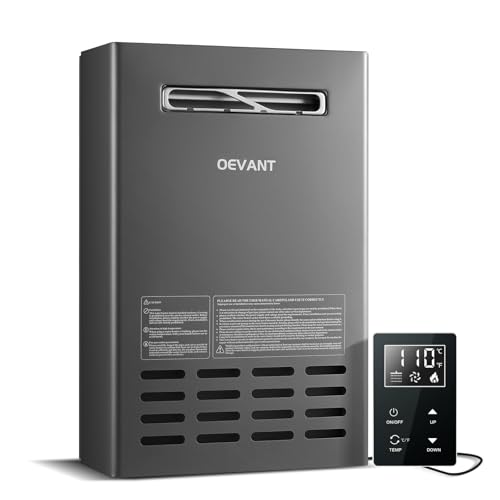
The OEVANT model provides 130,000 BTU and 5.3 GPM for outdoor use, featuring remote indoor operation, wind resistance, and freeze protection for harsh weather. It’s CSA-certified and uses a copper heat exchanger with a stainless burner. Best for: outdoor installations in regions with variable weather where you still want reliable continuous hot water.
- Pros: All-weather performance, remote control, protection against extreme conditions.
- Limitations: 130,000 BTU is solid but lower than top-tier models; flow is best for smaller households or fewer simultaneous outlets.
VELPAX Propane Outdoor Tankless Water Heater

This 4.2 GPM propane tankless heater delivers 81,891 BTU with a compact, portable design suitable for RVs, camps, or cabins. It offers a strong on-demand flow for outdoor use and is notable for its low water pressure startup and adjustable control. Best for: off-grid or temporary outdoor use where lightweight, portable hot water is needed.
- Pros: Portable, reliable ignition, decent flow for outdoor tasks.
- Limitations: Lower GPM compared with home-focused units; best for smaller needs.
Rheem RTG-70XLN-3 Outdoor Tankless Gas Water Heater
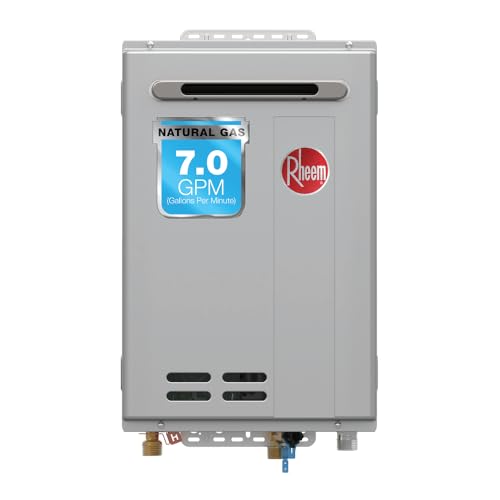
The Rheem RTG-70XLN-3 offers 7.0 GPM with 160,000 BTU, designed for outdoor installation and easy wall mounting. It targets mid-sized homes with multiple hot water needs at a reasonable flow rate. Best for: outdoor installation where a balance of BTU and GPM is sufficient for several simultaneous outlets.
- Pros: Durable outdoor unit, simple installation with wall mounting.
- Limitations: Outdoor-only model; performance drops if demand exceeds 7 GPM.
CAMPLUX Climatech 7 Tankless Water Heater

CAMPLUX’s unit lists 170,000 BTU with a real-world 6.86–7.6 GPM range and up to 7.6 GPM at certain conditions. It is designed for indoor use with natural gas and is CSA-certified for whole-house operation. Best for: homes seeking high BTU output in a compact, indoor-ready unit with strong simultaneous-flow performance.
- Pros: Real data BTU, strong flow, compact for indoor installation.
- Limitations: Real performance varies with inlet temperature and water pressure.
Buying Guide: BTU Gas Water Heaters
- How much BTU do I need? Higher BTU generally means higher potential GPM, but actual flow depends on input temperature, water temperature rise, and venting. For multi-outlet households, aim for models in the 180,000–199,000 BTU range for robust performance.
- Indoor vs outdoor: Indoor units require venting and may need additional clearance; outdoor units simplify installation but can be affected by weather. Consider climate and venting constraints when choosing.
- Condensing vs non-condensing: Condensing models (like the RX199iN) are typically more energy-efficient and may have lower exhaust temperatures, but may require specific venting components. Non-condensing units are often simpler and cost-effective but may consume more gas for the same hot water output.
- Flow rate vs demand: Calculate your peak GPM by summing the expected hot water use across showers, sinks, and appliances. If the target GPM exceeds 7–8, prioritize higher-BTU, multi-outlet models like RX199iN or APUS 190k.
- Vent and gas line requirements: Ensure your gas line size and venting meet the unit’s specification. Poor venting or undersized gas lines can limit performance and safety.
- WiFi and control options: Some models support remote control or diagnostics via Controlr or Tuya apps. If smart control matters, verify compatibility and required accessories.
Frequently Asked Questions
- What BTU should I choose for a family home? Answer: For a family home with multiple outlets, consider 180,000–199,000 BTU tanks to support several simultaneous draws.
- Do I need condensating technology? Answer: Condensing units save energy and are beneficial in homes with high hot water demand, but non-condensing units can be adequate for smaller households or outdoor installations with moderate use.
- Can these units be installed outdoors? Answer: Many listed models are outdoor-ready, but verify venting, weather protection, and local code requirements before installation.
- How do I estimate GPM needs? Answer: Add the highest hot water fixtures you expect to run simultaneously (e.g., showers, sinks, laundry). A 7–8 GPM unit covers many homes; larger households may require higher flow.
- What maintenance is needed? Answer: Regular flushing and inspection are advised to maintain efficiency. Some models include a Quick Flush feature for easier flushing and maintenance.
- Are WiFi controls essential? Answer: Not essential, but convenient for remote monitoring and adjustments. Ensure you have compatible accessories if needed.