Choosing the right low voltage disconnect (LVD) is essential for protecting batteries in 12V systems, whether for off-grid homes, solar setups, or marine applications. The following selections emphasize reliable protection, adjustable voltage thresholds, and clear status indicators. Each product is compatible with common 12V configurations and includes features to extend battery life while preventing deep discharge. The table below highlights five standout options and their core capabilities to help you compare quickly.
| Product | Brand |
|---|---|
| Blue Sea Systems 7635 m-LVD Low Voltage Disconnect | Blue Sea Systems |
| CZH-LABS LVD Low Voltage Disconnect Module (36V / 30A) | CZH-LABS |
| CZH-LABS LVD Low Voltage Disconnect Module (12V / 30A) | CZH-LABS |
| OONO 18V/30A LVD Module | OONO |
| Zuomeng 12V 30A LVD Module with Display | Zuomeng |
In this guide, you’ll find a mix of Blue Sea Systems options and versatile third-party modules. The selections cover automatic disconnect on low voltage, adjustable setpoints, and clear indicators to help you monitor battery health and system status. Each entry is described with its intended voltage range, current rating, and notable features to support informed purchasing decisions.
Blue Sea Systems 7635 m-LVD Low Voltage Disconnect

The 7635 m-LVD from Blue Sea Systems provides a compact solution for monitoring and safeguarding battery voltage. It supports a 12V DC input and includes a status light to visually indicate when the low-voltage state is active prior to disconnect. This module is suitable for use in systems where a dedicated low-voltage cutoff is required to preserve battery life during extended periods of low energy production or idle loads. The device can operate in tandem with other power-saving controls to optimize overall efficiency.
CZH-LABS LVD Low Voltage Disconnect Module (36V / 30A)
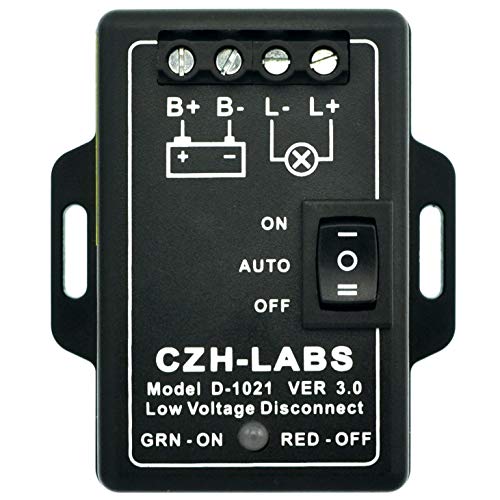
Operating voltage spans DC 13 to 48V with a 30A rating, the CZH-LABS LVD Module provides automatic disconnect when voltage falls below a user-set threshold and automatic reconnect when power returns. Its AUTO mode allows precise control over disconnect and reconnect behavior, extending battery life by preventing deep discharge. An emergency ON/OFF function adds flexibility for immediate control, making it suitable for both stationary and mobile 12V systems that require robust protection against undervoltage conditions.
CZH-LABS LVD Low Voltage Disconnect Module (12V / 30A)
This CZH-LABS model covers DC 6 to 18V with a 30A current rating. It automatically disconnects to protect electronics from low voltage and prevents total battery discharge during outages. The AUTO setting enables automatic disconnect/reconnect, with an emergency ON/OFF option for immediate control. Its compact form factor suits panel installations and tight compartments in vehicles or boats, delivering reliable undervoltage protection.
DC 6V-60V Low Voltage Protector Disconnect Switch Module

The CavalliFun module covers a broad 6–60V range with a 30A relay. It integrates dual-mode protection for charge and discharge, safeguarding the battery from over-discharge and prolonging life. A clear LCD display provides real-time voltage, percentage, and time, helping users monitor battery status and make informed decisions about load management. This model suits solar, automotive, and emergency backup systems needing reliable undervoltage protection and visibility.
Zuomeng 12V 30A LVD Module With Display
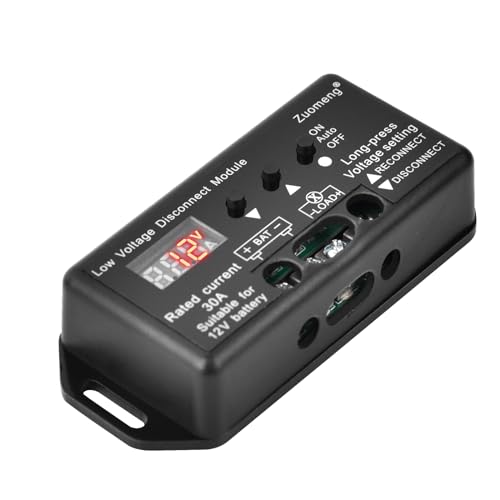
The Zuomeng module for 12V systems operates at 12V with a 30A rating and features a multi-information display and 0.1V precision voltage regulation for accurate threshold control. It acts as a dual protector, automatically disconnecting at a user-defined cutoff and reconnecting after a short delay to restore power safely. Its precision and adjustable settings make it suitable for custom battery protection schemes and sensitive electronics that require stable voltage delivery.
Buying Guide
- Voltage range and system compatibility: Match the LVD’s operating voltage with your battery bank (12V is common, but some modules support up to 36V or 48V). Ensure the current rating (30A is typical) can handle your load and wiring.
- Disconnect thresholds: Look for adjustable or programmable voltages to tailor protection to your battery chemistry and usage patterns. AUTO mode is convenient for automatic control, while emergency ON/OFF provides manual override.
- Indication and monitoring: Status LEDs or LCD displays help you quickly assess battery health and the connected load state. This is useful for troubleshooting and long-term maintenance.
- Integration with other protection devices: Some modules can operate alongside timers or relays to create hybrid protection schemes, maximizing battery life and system reliability.
- Form factor and mounting: Consider panel-mount, surface-mount, or compact inline designs based on your enclosure space and installation requirements.
- Durability and environment: For marine or outdoor use, select models with appropriate enclosure ratings and robust connectors to withstand vibration and exposure.
- Power source and load considerations: If you use high-draw accessories or solar controllers, ensure the LVD’s current capacity and response time align with your power profile to avoid unintended outages.
- Battery chemistry compatibility: Some LVDs are optimized for lead-acid, lithium, or multi-chemistry systems. Verify compatibility with your battery type to prevent misconfigurations.
Choosing the right low voltage disconnect involves balancing protection, control granularity, and installation practicality. The listed options provide a spectrum from compact Blue Sea offerings to versatile CZH-LABS modules and capable third-party units, enabling you to tailor a reliable undervoltage protection strategy for 12V systems.