Automated three-way valves provide precise routing of liquids and gases in HVAC, irrigation, pools, and industrial systems. The following five products represent a range of materials, port configurations, and control voltages to suit different installations. Each selection offers motorized operation, a manual override option, and position feedback in many cases to support reliable automation.
Summary of chosen products:
| Product | Brand | Port Size | Voltage | Type |
|---|---|---|---|---|
| BACOENG Motorized Ball Valve, 1/2″ L Type | BACOENG | 1/2″ | AC/DC 9-24V | L Type, 3 Way |
| U.S. Solid 1″ 3 Way Brass Motorized | U.S. Solid | 1″ | AC/DC 9-24V | Brass, T Type |
| U.S. Solid 1″ 3 Way Stainless Steel | U.S. Solid | 1″ | AC/DC 9-24V | Stainless Steel, L Type |
| HSH-Flo 1/2″ 12V/24V | HSH-Flo | 1/2″ | AC/DC 9-24V | L Port, 3 Way |
| HSH-Flo 3/4″ 110-230VAC | HSH-Flo | 3/4″ | 110-230VAC | L Port, 3 Way |
BACOENG 1/2″ 3 Way Motorized Valve

The BACOENG unit is a 1/2″ L Type three-way valve designed for electrical control. It includes a 5-wire setup with capacitors to return when power fails and feedback signals. Built-in limit switches and an IP67 rating support durable operation in dusty or wet environments. A manual override ensures continued operation during outages, enhancing reliability in critical systems.
U.S. Solid 1″ 3 Way Brass Motorized Valve

This 1″ brass ball valve supports motorized control for versatile routing of water and other compatible fluids. It offers remote operation through its motorized mechanism and includes a manual override for hand operation if needed. The design is suitable for residential, commercial, or industrial applications where a robust brass body is advantageous.
U.S. Solid 1″ 3 Way Stainless Steel Valve
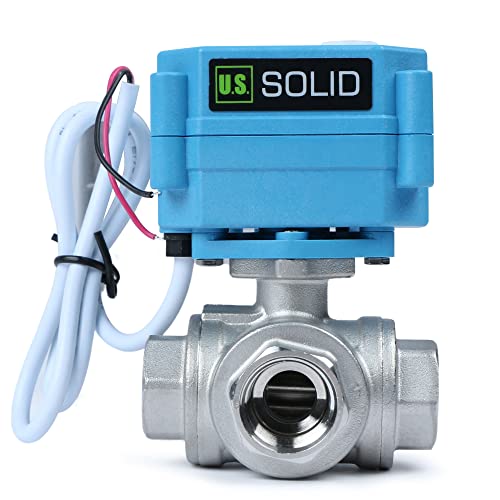
Constructed with stainless steel, this 1″ 3-way valve focuses on durability and corrosion resistance for demanding environments. Its motorized operation allows directing flow to different circuits, while a standard port configuration supports straightforward integration. The unit is designed for long service life with substantial cycle capability and reliability in automation projects.
HSH-Flo 1/2″ 12V/24V 3 Way L Port

The HSH-Flo 1/2″ valve features a stainless steel body with an L-port design and position feedback. It operates on 9-24VAC or 9-36VDC with a five-wire configuration and auto-return when power is cut. Limit switches provide built-in control, and the valve supports precise, automated positioning for complex piping layouts.
HSH-Flo 3/4″ 110-230VAC 3 Way

HSH-Flo’s 3/4″ valve operates on a wide voltage range (110-230VAC) and uses an NPT reduce bore design. It features built-in limit switches and an auto-off when the valve reaches its destination. This model is suitable for larger piping runs requiring full automation with reliable stopping points and intake control.
Buying Guide
- Port configuration and size: Choose L-port or T-port designs based on whether you need to divert, mix, or regulate flow. Match the port size to your pipeline to minimize pressure losses.
- Power and control: Evaluate voltage requirements (AC/DC 9-24V versus 110-230VAC) and whether your system needs position feedback, manual override, or both for reliability during outages.
- Materials: Brass valves suit potable and some industrial applications, while stainless steel offers enhanced corrosion resistance and longevity in harsher environments.
- Durability and cycles: Look for valves rated for a high number of cycles (e.g., 70,000+) if the system frequently switches. IP ratings (like IP67) add protection in dusty or wet areas.
- Installation considerations: Ensure the valve’s port orientation aligns with your piping. Consider space-saving designs that reduce the footprint in tight installations.
- Maintenance and safety: A manual override helps during maintenance or power loss. Built-in limit switches reduce risk by preventing overtravel.
- Application fit: Different devices handle water, air, and other fluids differently. Confirm compatibility with your specific fluid and temperature ranges before selecting a valve.
- Cost vs. capability: Higher-end models may offer more robust materials, feedback options, and protective features. Weigh these against your project’s reliability requirements and budget.