If you want a home alarm that you monitor yourself—without mandatory monthly fees—these options suit smaller homes, renters, or users who prefer flexibility. Self-monitoring works well for DIY enthusiasts who want immediate app alerts and straightforward setup, while some kits offer optional 24/7 monitoring for extra coverage. The top picks below balance ease of use, expandability, and clear signal to alert authorities when needed. The table highlights who each product is best for and how they differ in monitoring options.
| Product | Best For | ||
|---|---|---|---|
| OSI Alarm System Gen 2 | Tech-savvy homeowners seeking flexible self-monitoring | Self-monitoring or optional 24/7 monitoring (Canada only) | 4G connectivity and interactive setup wizard |
| Ring Alarm 8-Piece Kit | Small to mid-sized homes needing easy expansion | Self-monitoring with optional professional monitoring | User-friendly base kit with keypad and sensors |
| eufy Security 5-Piece Kit | Budget-conscious buyers who want no ongoing fees | No monthly fees; app-based control | One-time purchase with instant mobile alerts |
| Hapippofa Wireless Security System | Smart home lovers seeking voice control | WiFi/4G with 24/7 monitoring option | Alexa and Google Assistant compatibility |
| PGST Wireless Kit | DIY installers needing extensive expansion | No monthly fees; optional app alerts | Color display, remote control, and robust app support |
OSI Alarm System Gen 2 (4G) Self Monitoring
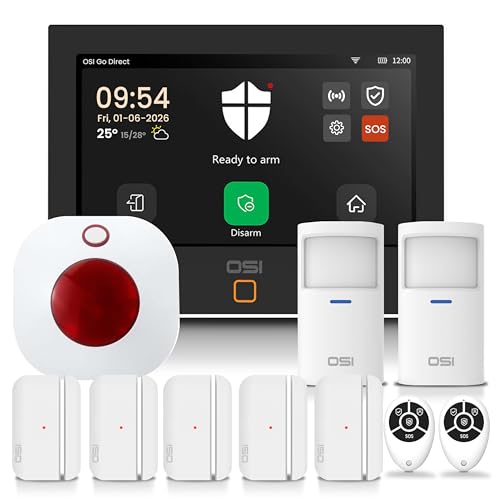
Best for tech-forward homeowners who want flexible monitoring. The Gen 2 panel supports self-monitoring with no monthly fees and also offers an optional 24/7 monitoring plan (Canada only). It uses 4G connectivity and can receive SMS alerts via a SIM card (SIM not included). A step-by-step Interactive Setup Wizard guides configuration, reducing setup error and ensuring correct sensor pairing. This kit includes motion and entry sensors, a wireless siren, remotes, and an app that syncs with Alexa. Caution: If you plan to use SMS alerts, a compatible SIM with an active plan is required and provider fees apply separately.
Ring Alarm 8-Piece Kit

Best for small homes and renters who want an expandable, intuitive system. The kit includes a base station, keypad, four contact sensors, a motion detector, and a range extender. Ring’s keypad enables quick arming and disarming, while door/window sensors monitor entry points. You can add more sensors and accessories later to tailor coverage. It’s suitable for users who prefer a familiar, consumer-friendly app environment and are comfortable with optional 24/7 professional monitoring. Caution: Ring’s ecosystem benefits from ongoing add-ons to reach full potential.
eufy Security 5-Piece Kit
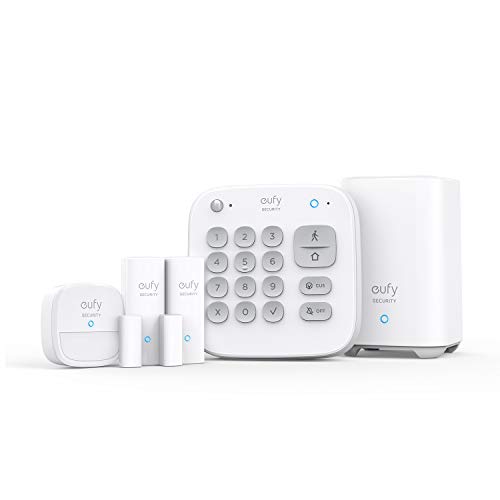
Best for homeowners seeking a budget-friendly, no-monthly-fee solution. This 5-piece kit includes key components for essential protection and connects to the eufy app for real-time alerts. The entry sensors secure doors and windows, while the motion sensor adds interior coverage. It supports easy self-installation and, since there are no ongoing fees, is attractive for users who want a one-time purchase. Caution: Depending on the model, broader coverage may require additional sensors or compatible cameras for comprehensive monitoring.
Hapippofa Wireless Security System

Best for smart-home enthusiasts who want voice control and broad connectivity. This kit supports both WiFi and 4G, with a dedicated app for real-time monitoring. It includes door/window sensors and motion detectors for full-home coverage. Alexa compatibility enables hands-free status checks and control. A potential limitation is the reliance on a stable internet connection; outages may affect notifications and remote access.
PGST Wireless Kit
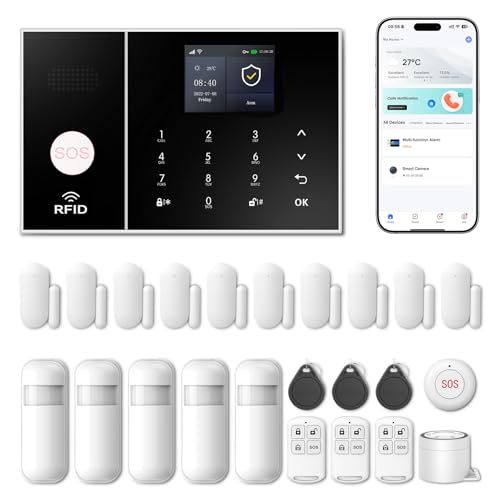
Best for DIY installers who want extensive expandability and app-based control. The kit offers WiFi plus GSM/4G options, with no required monthly fees for basic monitoring. The included color display helps users view system status at a glance, and the app supports remote control and sensor naming. A caution: Some users may prefer a dedicated hub for ultra-fast local processing, depending on home size and network conditions.
Buying Guide
Key questions to consider when selecting a self-monitoring alarm system:
- What is my preferred monitoring model? Do I want strictly self-monitoring or optional 24/7 professional monitoring?
- What connectivity works best for my home? 4G, WiFi, or a hybrid approach?
- How scalable is the system? Can I add sensors as needed without large upfront costs?
- How important is a simple setup and app experience? Do I want voice control or smart-home integration?
- What are the potential ongoing costs? Consider SIM plans, professional monitoring, and added accessories.
Practical considerations for comparing systems:
- Installation: Look for kits that advertise DIY setup, magnetic sensors, and a central hub with clear pairing steps.
- Alerts and notifications: Ensure the app provides real-time alerts, tamper alerts, and cross-channel notifications (app, SMS, email).
- Expansion options: If you foresee adding sensors or cameras, verify compatible accessories and future-proofing.
- Privacy and security: Check data handling policies and whether the system supports local processing or cloud-based alerts.
FAQ
Q: Do self-monitoring systems require a monthly fee?
A: No mandatory monthly fees are required for most self-monitoring options; some providers offer optional 24/7 monitoring for an additional charge.
Q: Can I use cellular (4G) alerts without internet?
A: Some systems support SMS or cellular alerts via a SIM card; check if your plan and SIM are active before relying on this feature.
Q: Are these kits suitable for renters?
A: Yes, many are designed for quick, non-invasive installation without wiring, which suits renters well.
Q: Will these systems integrate with smart-home platforms?
A: Several kits offer compatibility with Alexa, Google Assistant, or other smart-home ecosystems for voice control and status checks.
Q: What should I consider about privacy and data security?
A: Look for systems with encrypted communications, local processing where possible, and transparent data policies from the provider.