The top picks shown here are 150-foot extension cords designed for heavy-duty outdoor use, with a focus on 8-gauge options when available and strong 10-gauge alternatives for comparison. These cords are ideal for construction sites, landscaping, or powering high-draw tools from a distant outlet. If you need maximum flexibility and safer long runs, choose 8-gauge options first; otherwise, 10-gauge cords offer robust performance at a broader price range. The buyer-friendly table below summarizes the five most relevant products for 150 ft, highlighting who they are best for and why.
| Product | Gauge / Conductor | Best For | Key Benefit |
|---|---|---|---|
| WindyNation 150 Feet 8/4 8 AWG SOOW | 8 AWG / 4 Conductor | Heavy machinery, EV charging leads, outdoor job sites | Very flexible 8 AWG with rugged SOOW construction |
| 150ft 10 Gauge Outdoor Extension Cord Waterproof with Lighted Indicator (PlugSaf) | 10 AWG | General heavy outdoor use, tools, and equipment | Lighted end for visibility; ETL listed |
| POWGRN 150 Ft 10AWG Outdoor Extension Cord | 10 AWG | Construction, landscaping, lawn care | Bright jacket for visibility; weatherproof |
| Cismorvex 150ft Outdoor/Indoor with Lighted 10/3 Gauge | 10/3 Gauge | Indoor/outdoor versatility; long runs | Lighted end; flexible and cold-resistant |
| Deeklify 12 Gauge 150 FT Heavy Duty Outdoor Extension Cord | 12 AWG | Budget-friendly long runs for moderate loads | ETL listed; durable and weatherproof |
WindyNation 150 Feet 8/4 8 AWG SOOW Cable
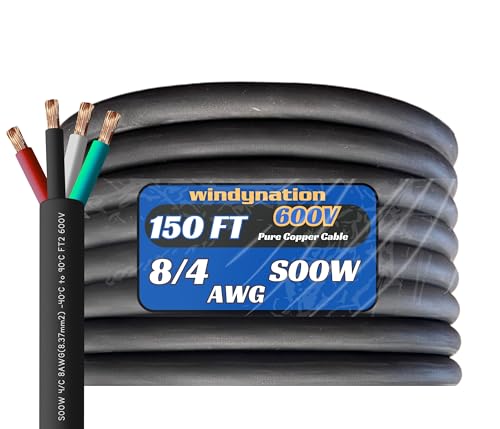
Product overview: WindyNation provides a heavy-duty 8 AWG extension cord with 4 conductors, designed for rugged outdoor use. This 150-foot cord meets UL and CSA standards for flexible cables and is suitable for portable power, EV charging leads, and industrial applications. Its extremely flexible copper conductors and durable outer jacket support tough environments.
- Best for rugged outdoor jobs requiring 8 AWG strength and four conductors.
- Better for high-draw tools and equipment over long distances.
- Limitations: As a high-capacity cord, it is less pliable in tight spaces compared to smaller gauges.
PlugSaf 150ft 10 Gauge Outdoor Extension Cord Waterproof

Product overview: This 150-foot outdoor cord uses 10 AWG conductors with a lighted end for power status visibility. It’s ETL and cETL listed, weatherproof to IP65, and designed for heavy-duty outdoor tasks such as power tools, lawn equipment, and seasonal lighting.
- Best for: users who want a visible power status indicator and solid outdoor performance.
- Why selected: Strong weather sealing and a flexible jacket suited to outdoor use.
- Caution: 10 AWG is not as low resistance as 8 AWG; expect slightly higher voltage drop on very long runs with high-load devices.
POWGRN 150 Ft 10AWG Outdoor Extension Cord Black
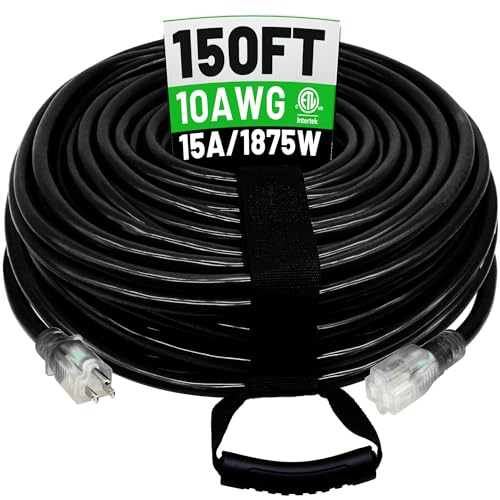
Product overview: This 150-foot 10 AWG extension cord emphasizes heavy-duty use with a lighted end. It’s designed for outdoor visibility and weather resistance, with an IP65 rating and a jacket that remains flexible in cold conditions.
- Best for: professionals needing strong visibility and dependable performance in variable weather.
- Why selected: Notable for safety features and long-term flexibility.
- Caution: For ultra-heavy loads at the far end, consider 8 AWG if the run is subject to high startup currents.
Cismorvex 150ft Outdoor/Indoor Lighted 10/3 Gauge

Product overview: This 150-foot extension cord with a lighted end uses 10/3 gauge and is designed for both indoor and outdoor use. Durable, flexible, and cold-resistant, it is suitable for long-distance power needs in varying environments.
- Best for: long outdoor runs where visibility and reliability are important.
- Why selected: 10/3 gauge provides additional current-carrying capacity with better performance for certain tools.
- Caution: Heavier gauge combinations can be stiffer; ensure storage space and routing accommodate longer, heavier cords.
PlugSaf 150ft 10 Gauge Yellow Lighted Extension Cord

Product overview: This yellow 150-foot 10 AWG extension cord features a lighted end for status indication, ETL listed, with IP65 waterproof protection and weather-resistant construction. It is designed for visibility and safety on busy or dim work sites.
- Best for: outdoor projects needing high visibility and robust weatherproofing.
- Why selected: The yellow color improves site visibility and reduces tripping hazards.
- Caution: 10 AWG means moderate resistance; for very long, high-load runs, consider larger gauge if feasible.
Buying Guide: Key Considerations For 150 Ft Extension Cords
Choosing the right 150-foot extension cord involves evaluating load needs, environment, and safety features. Consider these practical questions to guide your decision:
- What is the typical load (amps) of devices you’ll power at the end of the cord?
- Will the cord be used indoors, outdoors, or in both environments?
- Is weatherproofing essential for the location and season?
- Do you need a lighted end to confirm power on, or is a plain end sufficient?
- Is maximum flexibility important for routing around equipment or vehicles?
Gauge and construction: 8 AWG provides the lowest resistance for long runs and high-draw devices, making it ideal for demanding loads on 150 ft. 10 AWG is a strong alternative offering good performance at a lower cost, while 12 AWG is typically lighter duty and may be more suitable for moderate loads over long distances. Weatherproof, IP-rated jackets, flame resistance, and flexible materials help ensure safe operation in varied environments. A lighted end can improve safety by indicating power status, particularly in dim work areas.
FAQ
- Q: Is an 8-gauge cord always better than 10-gauge for 150 ft runs? A: Generally, yes for high-load devices, as it reduces voltage drop and heat, but it is heavier and less flexible.
- Q: Can I use a 150 ft cord indoors? A: Yes, but ensure indoor-rated IP and flexibility requirements are met and cords aren’t a tripping hazard.
- Q: What is the importance of ETL/cETL listing? A: It indicates compliance with safety standards, which reduces the risk of electrical faults.
- Q: Do lighted ends affect performance? A: They don’t affect voltage delivery, but they add visibility for safe operation.
- Q: How should I store a 150 ft extension cord? A: Coil it properly, avoid sharp bends, and store in a dry, cool place to preserve insulation.
- Q: When should I choose 12 AWG over 10 AWG? A: If the load is light-to-moderate and distance is long, 12 AWG can be a cost-effective option, though voltage drop remains a consideration.