Finding a reliable 8 gauge extension cord for 100 feet ensures you can power heavy tools, outdoor equipment, or solar setups without excessive voltage drop. This guide highlights top-rated 8 AWG options and closely related heavy-duty extensions, offering practical guidance on choosing the right cord for your needs. Each product section includes key features to help you compare at a glance.
Summary of Selected Products
| Product | Brand | Gauge / Length | Key Benefit |
|---|---|---|---|
| 8/3 SOOW Wire 100FT | Kimbluth | 8 AWG, 100 ft | Industrial-grade, multiple conductors, robust jacket |
| 8 AWG Solar Cable 100FT | YDDECW | 8 AWG, 100 ft | Solar-specific, UV/abrasion protection, dual insulation |
| POWGRN 100 Ft 10AWG | POWGRN | 10 AWG, 100 ft | Waterproof, lighted end, heavy-duty outdoors |
| PlugSaf 100 FT 10 Gauge | PlugSaf | 10 AWG, 100 ft | 3 outlets, weatherproof, visible end |
| LifeSupplyUSA 100ft 10 Gauge | LifeSupplyUSA | 10 AWG, 100 ft | Lighted end, durable jacket, visibility |
8/3 SOOW Wire 100FT — Kimbluth

Designed for industrial, outdoor, and heavy-duty applications, this 8 AWG SOOW cable features three conductors with a robust oil, water, and acid-resistant PVC jacket. Operating in harsh environments (-40°C to 90°C) and rated for 600V, it delivers dependable current capacity for tools, generators, and equipment. OFC conductors enhance conductivity and heat dissipation, supporting safer operation under load. Ideal for sites where flexible, portable power is required in challenging conditions.
Key details include a rugged insulation system, strong abrasion resistance, and suitability for demanding tasks such as power distribution for welders, portable lights, or outdoor machinery. This cord is built to endure exposure to oils and solvents common on job sites, making it a preferred choice where durability and reliability are paramount.
8 AWG Solar Cable — YDDECW

This 8 AWG solar extension cord is purpose-built for photovoltaic systems and solar panel setups. It uses thicker conductors to minimize power loss and employs tin-plated copper for improved conductivity and corrosion resistance. The jacket is reinforced with a black braided sleeve to resist heat, UV exposure, abrasion, and rodent damage, extending the cable’s lifespan in outdoor solar installations. Rated for up to 1800V DC, it’s suitable for connections between panels, inverters, and batteries, with weatherproof protection to deter environmental wear.
Consider this option if your primary use involves solar equipment where long runs and efficient energy transfer matter, especially in outdoor arrays with exposure to heat and sunlight. The sleeve and insulation provide a higher level of protection in sun-drenched environments.
PlugSaf 100 FT 10 Gauge Outdoor Extension Cord
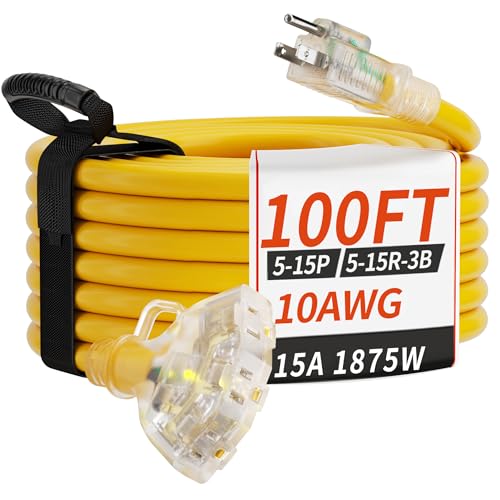
This 10-gauge outdoor extension cord features three outlets and a bright yellow jacket for high visibility. It’s rated for outdoor use with SJTW weatherproof construction and an ETL/cETL listing. The cord stays flexible in cold temperatures and remains resistant to wear in harsh conditions. A light indicator lets you know when power is flowing, and the long cord is designed to minimize tripping risks by remaining easy to spot in dim light. While it’s 10 gauge, it remains a practical choice for powering multiple devices on larger outdoor jobs.
LifeSupplyUSA 100ft 10 Gauge Outdoor Extension Cord
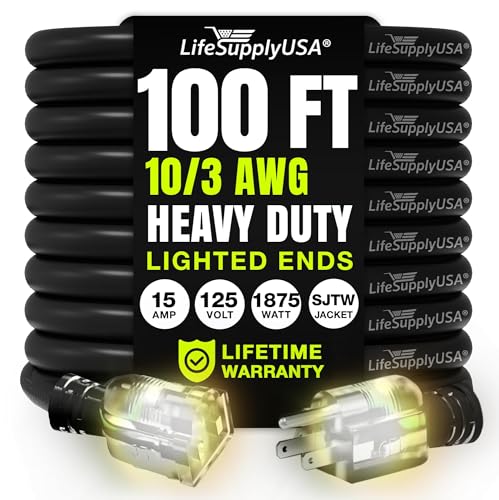
LifeSupplyUSA’s 100-foot, 10-gauge extension cord emphasizes durability and safety in outdoor environments. The three-prong design, a bright jacket, and a lighted end improve visibility and indicate when power is active. The jacket construction withstands oil, moisture, and abrasion, contributing to a longer service life in construction sites, gardens, or workshops. The cord is ETL/cETL listed, ensuring compliance with safety standards for consumer use. Its rugged build makes it a solid general-purpose heavy-duty option when 8 AWG is not strictly required.
Buying Guide
Key considerations help you select the right 8 gauge extension cord (or close equivalents) for your needs:
- Gauge and length: 8 AWG cords are designed for higher current and reduced voltage drop over long distances. If your load is heavy (welding, motors, or high-wattage tools), 8 AWG is preferred. For general lighting or tools, 10 AWG may suffice, but 100 ft can still introduce appreciable drop depending on load.
- Voltage and amperage rating: Ensure the cord is rated for the required voltage (typically 125 V or 250 V in the US) and the current your devices will draw. For 8 AWG solar and industrial cords, check DC voltage ratings and AC compatibility as applicable.
- Outdoor suitability and jacket: Look for SJTW or SOOW jackets for moisture, heat, and abrasion resistance. UV resistance is important for sun-exposed runs. Oil resistance is a plus near construction sites or garages.
- Temperature range: If the cord must function in extreme cold or heat, confirm the operating temperature range (-40°F to 140°F and beyond is common for outdoor cords).
- Safety features: Lighted ends help verify power at the far end, strain relief reduces wear at plug connections, and high-voltage testing (e.g., 1500V test) supports safer operation with long runs.
- Durability and build: OFC conductors, robust insulation, and reinforced jackets extend life under repeated bending and rough conditions.
- Compliance and listing: ETL/cETL listing indicates compliance with safety standards, an important factor for both home and professional use.
In selecting among these options, balance the need for 8 AWG performance with the practicality of the environment. For solar installations and heavy-duty industrial tasks, the 8 AWG solutions provide the best margin against voltage drop and heat. For general outdoor power distribution with multiple outlets, 10 AWG cords with weatherproof features offer sufficient reliability at a lower cost and greater flexibility. Always inspect the jacket integrity and look for strain relief on both ends to maximize longevity in demanding settings.