The best 600 watt high pressure sodium (HPS) grow light options are chosen for bloom-focused growers seeking strong red-spectrum output and high PAR. This guide highlights five top choices, explains who each is best for, and notes practical considerations like ballast compatibility and longevity. Ideal buyers include professional hydroponics setups, home growers optimizing flowering, and those upgrading from lower-wattage lamps seeking brighter, more efficient performance. Below is a quick reference table of the featured products and their key traits.
| Product | Base / Type | Approx. Lumen / PAR | Special Note |
|---|---|---|---|
| GRUOTVSZAK HPS 600W Grow Light Bulb (2-Pack) | E39, HPS | 90000 lumens, 1150 μmol/s | Red-boosted spectrum for bigger buds |
| iPower 600W HPS Grow Light Bulb Lamp (2-Pack) | E39, HPS | 85,000 lumens | Optimized red & orange spectrum, 2100K |
| Vegelumax 600W HPS Grow Light Bulb (1-Pack) | E39, HPS | 90,000 lumens | 2100K, strong red/orange spectrum |
| iPower 600W HPS Grow Light Bulb (4-Pack) | E39, HPS | 85,000 lumens | Bulk pack option for multi-lamp setups |
| TOPHORT 600W Dimmable Ballast for HPS/MH | 600W ballast, blue tag | Supports HPS and MH bulbs | Digital dimmable ballast |
GRUOTVSZAK 600W HPS Grow Light Bulb — 2-Pack

Product overview: This 600W HPS bulb offers 1150 μmol/s output with about 90,000 lumens, designed to deliver a more red-focused spectrum aimed at flowering. It is stated to yield bigger buds through enhanced red light utilization. The bulb is compatible with both electronic and magnetic ballasts and uses an E39 base. Best for: growers pursuing higher red PAR for late-stage bloom and bigger fruit set. Limitation: data emphasizes red concentration; growers seeking broader spectrum for vegetative stages may prefer alternatives.
iPower 600W HPS Grow Light Bulb Lamp — 2 Pack

Product overview: This 600W HPS bulb is optimized for professional hydroponic growth, featuring a 2100K color temperature and enhanced red and orange spectrums to stimulate flowering and fruiting. It provides high PAR output and promises steady lumen maintenance (over 90% after thousands of hours). Best for: growers who want a reliable, full-spectrum boost with strong flowering cues. Limitation: some users may prefer a slightly warmer or cooler spectrum depending on their crop mix.
Vegelumax 600W HPS Grow Light Bulb — 1 Pack

Product overview: This 600W HPS bulb aims for 90,000 lumens with a 2100K color temperature, prioritizing red and orange spectra to boost flowering. It is designed for professional hydroponic cultivation and promises high PAR efficiency. Best for: growers focusing on bloom yield with robust disease and heat tolerance expectations. Limitation: single-ended design may be outpaced by newer double-ended options for some setups.
iPower 600W HPS Grow Light Bulb — 4 Pack

Product overview: This bulk option provides four 600W HPS bulbs with similar specs: 85,000 lumens, 2100K CCT, and enhanced red/orange spectrums for flowering. Best for: growers running multi-lamp installations or larger operation spaces seeking cost-effective, consistent blooms. Limitation: bulk packs may require more ballast management and scheduling for uniform coverage.
TOPHORT 600W Digital Ballast For HPS/MH — 600W, Blue
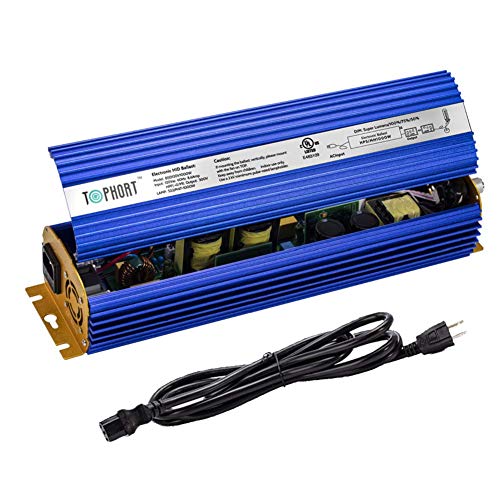
Product overview: This ballast is designed for both HPS and MH bulbs with 600W rating and a blue tag indicating compatibility. It supports 120V and 240V, with stable high-frequency output to minimize power loss. Best for: growers upgrading ballast technology to improve efficiency and compatibility with mixed lighting strategies. Limitation: ballast alone does not include a bulb; pairing requires selecting an appropriate HPS bulb from this or other lists.
Buying Guide
Key considerations when selecting a 600W HPS bulb or ballast:
- Spectral emphasis: Look for red-dominant spectra (around 2100K) to maximize flowering and fruiting, but consider a broader spectrum if you need vegetative growth support as well.
- Ballast compatibility: Ensure the bulb is compatible with your electronic or magnetic ballast; some ballast models offer dimming or dual-use capabilities for HPS and MH lighting.
- Double-ended vs single-ended: Double-ended (DE) lamps often deliver higher PAR efficiency and uniformity, but require appropriate fixtures and ballasts.
- Lumens and PAR metrics: While lumens indicate brightness, PAR (μmol/s) directly relates to photosynthetic active radiation available to plants. Higher PAR can support faster growth during bloom.
- Longevity and lumen depreciation: Lamps can lose lumen output over time. Some products claim higher maintenance of initial output after thousands of hours.
- Quantity vs space: Bulk packs reduce per-lamp cost but require more fixture space and ballast management for even coverage.
- Safety and handling: HPS bulbs operate hot and require proper ventilation and heat management in grow spaces.
FAQ
- Q: What makes a 600W HPS bulb suitable for flowering? A: It provides strong red-orange spectrum and high PAR, which signals flowering and fruiting pathways in many crops.
- Q: How do I know if my ballast supports my 600W HPS bulb? A: Check ballast rating and base compatibility (usually E39 for these bulbs) and confirm whether the ballast is electronic or magnetic.
- Q: Are double-ended HPS lamps worth it? A: DE lamps typically offer higher PAR and uniform light distribution, but require compatible DE fixtures and ballasts.
- Q: Should I buy in bulk or single bulbs? A: Bulk packs are cost-effective for larger grow spaces, while single bulbs suit small or modular setups.
- Q: How long should an HPS bulb last? A: Many bulbs maintain a large portion of their initial lumen output for thousands of hours, but performance can vary with use and ballast.
- Q: Can I mix HPS with other light types? A: Some growers combine HPS for flowering with additional blue-light sources for vegetative stages, but ensure ballast and fixture compatibility.