Choosing a gas water heater with reliable power venting is essential for homes that demand steady hot water and safe venting solutions. This guide highlights five strong options, emphasizing energy efficiency, compact design, and practical features for households with multiple bathrooms or higher hot water needs. Each product below is evaluated for performance, venting compatibility, and ease of installation to help you compare quickly and make an informed decision.
| Product | Brand | Approximate Capability | Key Vent/Power Features |
|---|---|---|---|
| Rheem RTGH-95DVELN-3 | Rheem | 9.5 GPM, 199,900 BTU | Condensing, indoor power-vent, WiFi control |
| GASLAND CG422NG | GASLAND | Up to 4.22 GPM, 102,000 BTU | Compact indoor vent-ready design, precise temp control |
| VEVOR Gas Tankless Water Heater | VEVOR | 100,000 BTU/h, 4.3 gal/min | LED display, smart temperature control, multi-safety protections |
| AQUAH Premium Direct Vent | AQUAH | 3.7 GPM, 95,600 BTU/h | Direct vent, compact indoor unit, high efficiency |
| Gas Heater Vent System | Tjernlund | Ventilation accessory | US-made venting system accessories |
The table above summarizes five options that align with gas-powered, vented water heating needs. While not all offer the classic 50-gallon tank, these selections emphasize power-vent design, compact footprints for indoor installation, and modern controls that enhance efficiency and safety. Use this as a quick reference when weighing capacity, venting compatibility, and installation considerations for your home.
Rheem RTGH-95DVELN-3 Super High Efficiency Condensing Indoor Tankless Gas Water Heater
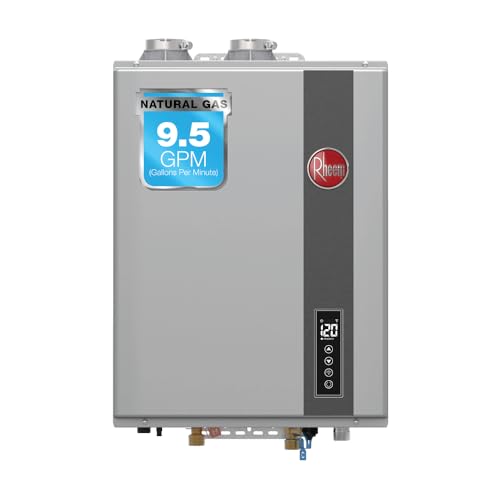
The Rheem RTGH-95DVELN-3 is a high-efficiency indoor tankless gas water heater designed to deliver up to 9.5 GPM with 199,900 BTU. Its condensing technology offers an energy efficiency factor around .93 UEF, enabling substantial energy savings compared with standard 50-gallon tanks. The unit supports large homes with multiple showers and appliances running simultaneously, reducing the risk of running out of hot water. It operates on natural gas and includes features aimed at fast, reliable performance during peak demand, alongside WiFi-enabled controls for remote monitoring and diagnostics. This model emphasizes continuous hot water with improved energy efficiency. Note: It is tankless, not a 50-gallon tank, but its power-vented design and compact footprint suit homes seeking high-volume hot water with efficient venting solutions.
Key features include:
– High flow for multi-bath households
– Condensing efficiency and modern controls
– Natural gas with substantial BTU output
– Indoor installation with modern venting considerations
Considerations: Tankless systems can have installation complexity and require proper venting and gas supply sizing. If upgrading from a traditional tank, plan for vent routing, space, and potential Bluetooth/WiFi configuration needs.
VEVOR Gas Tankless Water Heater

The VEVOR Gas Tankless Water Heater provides 100,000 BTU/h of heating power with a flow rate of about 4.3 GPM. It features ±1°F precision temperature control through smart sensors and a large LED display for real-time status monitoring. The unit focuses on stable temperature and consistent hot water delivery, with a user-friendly interface that simplifies temperature adjustments. While not a 50-gallon tank, its tankless design offers on-demand hot water and space-saving installation advantages for smaller homes or retrofits. The venting requirements align with modern power-vented gas systems, making it a practical option in many installations.
Key features include:
– Precise temperature control
– Real-time LED display
– Smart sensors for stable performance
– Safe operation with multiple protections
Considerations: This unit is tankless and compact. Ensure your home’s gas line capacity and venting are compatible, and consider whether 4.3 GPM meets peak household demand if multiple fixtures are used simultaneously.
GASLAND Compact Natural Gas Tankless Water Heater CG422NG

The GASLAND CG422NG is designed for indoor use with a compact footprint and up to 4.22 GPM at 102,000 BTU. It emphasizes exceptional temperature stability and precise control, reducing fluctuations as water usage changes. The unit uses advanced flow sensors and a high-speed processor to maintain temperature within a tight range, delivering consistent comfort across multiple taps. Its compact dimensions (approximately 18.5″ H x 12.2″ W x 6.38″ D) make it suitable for tight spaces, apartments, or upgrades where space is at a premium, while still providing reliable hot water during peak demand phases.
Key features include:
– Temperature stability across varied demand
– High-precision control (±0.5°F)
– Compact indoor design
– Efficient operation suitable for smaller homes
Considerations: The 4.22 GPM rating may limit simultaneous usage in households with many outlets. Venting compatibility and gas supply sizing should be verified during installation planning.
Gas Heater Vent System

This entry covers venting accessories essential for safe and compliant operation of gas-powered heaters. The Gas Heater Vent System from Tjernlund is a U.S.-made option focused on venting reliability and safety. Proper venting is critical for indoor gas water heaters, ensuring exhaust is directed outdoors and combustion byproducts are safely managed. While not a heater itself, this category addresses a pivotal installation consideration that affects performance, efficiency, and indoor air quality. Selecting a compatible vent system is a key step in any gas-powered water heating project.
Key considerations include:
– Compatibility with chosen heater type (tankless or tank)
– Proper vent diameter, length, and routing
– Materials meeting building code and safety standards
– Professional installation recommendations
Considerations: Ensure that the vent system matches your heater’s venting requirements, including power vent considerations if venting to an exterior location. A qualified installer can verify code compliance and ensure safe exhaust handling.
AQUAH Premium Direct Vent Natural Gas Tankless Water Heater

The AQUAH Premium Direct Vent model delivers 3.7 GPM with a thermal output of 28,000 Watts (95,600 BTU/h). It features a direct vent design optimized for indoor use, offering a balance between compact size and efficiency. The unit is designed for indoor installation with a venting solution that channels exhaust directly outside, contributing to safe operation and steady hot water for modest household needs. Its relatively compact footprint makes it appealing for smaller homes or retrofit projects where space conservation is important.
Key features include:
– Direct vent for indoor installation
– Moderate GPM suitable for smaller households
– High efficiency for a compact unit
– Reasonable thermal rise for typical climates
Considerations: Evaluate whether 3.7 GPM meets peak demand when multiple fixtures are in use. Venting compatibility and gas supply should be assessed during installation planning.
Buying Guide: Key Purchase Considerations for Gas Water Heaters with Power Vent
- Hot water demand and flow rate: For multi-bath homes, prioritize higher GPM and BTU ratings. Tankless options offer endless hot water but depend on simultaneous usage and gas supply.
- Ventilation and venting type: Power venting requires proper vent routing and clearances. Indoor installation benefits from compact design but demands careful vent design and code compliance.
- Efficiency: Condensing models provide higher efficiency (UEF ratings) and energy savings over standard units. Consider long-term utility costs and potential rebates.
- Gas supply and pressure: Ensure your gas line capacity matches the unit’s BTU/h. Undersized gas supply can limit performance and cause flame knocking or poor heating.
- Space and installation: Tankless units save space but may require more complex installation. Tank-based systems are larger but simpler in some configurations; select based on available space and existing venting.
- Controls and diagnostics: WiFi or app-based monitoring can aid maintenance and fault diagnosis. Look for easy-to-use interfaces and clear error reporting.
- Warranty and service network: A strong warranty and accessible service network reduce long-term maintenance risks.
- Cost of ownership: Initial cost, installation complexity, and ongoing energy use should be weighed against reliability and hot-water needs.
In summary, the best choice depends on your home’s hot-water needs, available space, and venting capabilities. Tankless options provide on-demand heating and energy efficiency, but require careful sizing, venting, and gas supply considerations. Traditional tank-based systems with power venting may be simpler to install in some scenarios, but may not offer the same efficiency gains as condensing models. Consult a licensed professional to confirm appropriate capacity, venting configuration, and local code compliance for your specific home.