For reliable off-grid energy, a 48V 300Ah LiFePO4 battery system offers scalable storage, long cycle life, and flexible integration with solar setups, RVs, and home backup power. Below are five top-rated options, each with robust BMS protection, high energy density, and versatile communication interfaces to match common inverters and monitoring ecosystems. The following selections emphasize durability, expandability, and ease of installation to help you compare without guesswork.
| Product | Brand | Capacity (Ah) | Voltage | Key Features |
|---|---|---|---|---|
| SaiJiaoYang 15kWh Kit | SaiJiaoYang | 300 | 51.2 | 200A BMS; CAN/RS485; 15kWh expansion |
| Oasesenergy 300Ah | Oasesenergy | 300 | 51.2 | Built-in 200A BMS; RS485 & CAN; 16 in parallel |
| HumsiENK 4-Pack 12V | HumsiENK | 1200 (4×300) | 12 | Bluetooth monitoring; 15,000+ cycles |
| EconomiPower 300Ah | EconomiPower | 300 | 51.2 | 200A BMS; RS485/CAN; up to 15 in parallel |
| Oasesenergy 300Ah Lite | Oasesenergy | 300 | 51.2 | 200A BMS; LCD; app control |
These products share common strengths: high energy density, strong protection, and easy integration with standard 48V inverters. They also vary in monitoring interfaces, expansion options, and mobility features. Use the table above to narrow your shortlist, then review each option’s compatibility with your solar array, inverter, and preferred monitoring workflow.
SaiJiaoYang 15kWh Lifepo4 48V 300Ah Battery

The SaiJiaoYang 51.2V 300Ah LiFePO4 battery combines advanced A-cells with a rugged metal enclosure to deliver thousands of cycles. A built-in 200A BMS protects against overcharge, over-discharge, over-current, and overheating, while logging charge-discharge data for performance tracking. The system supports parallel configurations of up to 15 units, enabling expansive energy storage up to 225kWh for domestic or industrial applications. Ideal for home energy storage, RVs, and solar off-grid setups, this model emphasizes long-term reliability and scalable capacity.
Oasesenergy 48V 300Ah with 200A BMS

Oasesenergy’s 51.2V 300Ah LiFePO4 battery packs 15.36kWh into a compact form factor with a built-in 200A BMS. Communication options include RS485 and CAN, aligning with many popular 48V inverters for home storage and off-grid systems. The design supports up to 16 batteries in parallel, making it suitable for larger installations. Its integration-friendly profile, along with wheels for mobility and easy mounting, highlights quick deployment for residential or emergency backup power.
HumsiENK 4 Pack 12V 300Ah LiFePO4

HumsiENK presents a four-pack 12V 300Ah LiFePO4 system with Bluetooth monitoring, app-ready data access, and a claimed 15,000 cycles. The package provides 4×300Ah at 12V, which can be configured for higher total capacity in RVs, boats, or small off-grid builds. A built-in 100A BMS supports basic protection, while the Bluetooth app delivers real-time voltage, current, and state-of-charge information for users who prioritize mobile monitoring and space efficiency.
EconomiPower 48V 300Ah LiFePO4 Battery
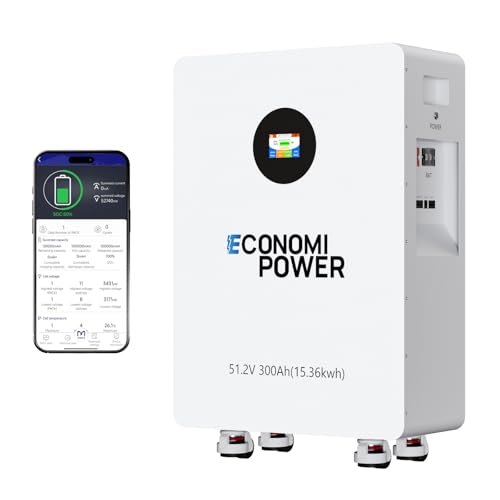
EconomiPower emphasizes scalable capacity with a 15kWh single-unit design and a robust 200A BMS. It supports up to 15 batteries in parallel and offers RS485 and CAN communication for broad compatibility with 48V inverters. The unit is described as ideal for private energy storage, solar systems, motorhomes, and emergency rescue scenarios. Mobility features and simple parallel expansion make it a practical choice for homeowners seeking a future-proof, expandable power storage solution.
Oasesenergy 51.2V 300Ah With LCD and App

This Oasesenergy model showcases a 51.2V 300Ah LiFePO4 battery featuring a 200A integrated BMS, an LCD monitor, and app control. It stores up to 15.36kWh and supports parallel expansion up to 15 units, enabling sizable off-grid systems and reliable home backup. Dual communication protocols (RS485 and CAN) ensure broad inverter compatibility, while the design emphasizes easy integration and user-friendly monitoring for ongoing system health checks.
Buying Guide: Key Purchase Considerations for 48V 300Ah LiFePO4 Batteries
When selecting a 48V 300Ah LiFePO4 battery, consider the following factors to ensure you choose a unit that fits your needs and provides long-term value.
- Battery chemistry and cycle life: LiFePO4 offers high cycle life, safety, and stability. Look for cells rated for 8,000–15,000+ cycles at meaningful DoD to match your usage profile.
- BMS protections: A robust 200A BMS is common at this capacity, with protections against overcharge, over-discharge, short circuits, and temperature extremes. Some BMS units also log data for performance tracking.
- Voltage and capacity alignment: Most models operate around 51.2V nominal and 300Ah. Verify that your inverter, charge controller, and wiring are rated for this voltage and current.
- Expansion and parallel capability: If you anticipate growth, ensure the battery supports multiple units in parallel (often up to 15 or more) to reach higher energy storage targets.
- Communication interfaces: RS485 and CAN are common; some models also include Bluetooth or Wi-Fi for app monitoring. Confirm compatibility with your inverter or energy management system.
- Mobility and installation: Some options offer integrated wheels or compact form factors for easier installation in limited spaces. Assess mounting options, weight, and handling needs.
- Monitoring and control: Real-time data access via LCD touchscreens or mobile apps helps track state of charge, voltage, temperature, and cycle history. Consider whether you prefer wired or wireless monitoring.
- Operating temperature and safety: Check operating temperature ranges and protections against low-temperature charging to avoid performance degradation in cold climates.
- Warranty and support: Durable warranties and responsive support can be decisive factors given the long-term nature of storage systems.
In sum, the best choice depends on your system size, expansion plans, and preferred monitoring workflow. For large, expandable installations with robust data capabilities, models with 200A BMS and parallel-ready design are compelling. For simpler or mobile setups, compact units with integrated wheels and Bluetooth monitoring may offer better installation flexibility. Always verify inverter compatibility and ensure safe, compliant wiring and grounding when assembling your system.