Looking for a reliable 48V 20Ah battery charger to power your electric ride or toys? This guide compares five top Amazon options, highlighting who each charger is best for, notable strengths, and practical cautions. Whether you’re outfitting a scooter, go-kart, or LiFePO4 battery pack, these chargers cover lead-acid and lithium models with varied input ranges and protections. Each product is evaluated for compatibility, charging speed, safety features, and ease of use.
Summary table of selected products at a glance:
| Product | Best For | Key Benefit | Notable Limitation |
|---|---|---|---|
| 48V 20AH Lead Acid Battery Charger for Scooter, Go-Karts, Baja | Lead-acid battery systems | Wide input range, 3A max current | Not for lithium batteries |
| YZPOWER 54.6V 4A Lithium Battery Charger | Large Li-ion packs | Slim, portable, built-in fan, HD display | Not universal for all 48V chemistries |
| BTCETHBNB 48V20AH Lead Acid Battery Charger | Lead-acid setups with status indicators | Three-color display, auto shut-off | Only lead-acid compatible |
| BROODAY 48V 20A LiFePO4 Charger | LiFePO4 chemistry | Smart protections, fast charging | Not compatible with other chemistries |
| YZPOWER 58V 4A Lead Acid Battery Charger | GLE/AGM and lead packs | Built-in fan, auto-shutdown | Higher voltage than typical 48V battery packs |
48V 20AH Lead Acid Battery Charger for Scooter, Go-Karts

This charger is designed for lead-acid battery systems used in scooters, go-karts, Baja-style toys, and similar applications. It accepts 100-240V input and delivers up to 150W with a 3.0 A max output, making it suitable for mid-sized packs. Best for buyers who operate lead-acid packs and prioritize a straightforward, high-compatibility charger. It is not compatible with lithium batteries, so avoid if your pack is Li-ion or LiFePO4. A practical limitation is the need to confirm battery chemistry before purchase to prevent misfit use.
YZPOWER 54.6V 4A Lithium Battery Charger

Best for larger Li-ion or Li-poly packs in the 13S to 20Ah range. This charger provides 54.6V at 4A and includes a built-in silent cooling fan and an HD display. It emphasizes safety protections and robust construction, with a portable design and non-slip base. It’s ideal when you need precise charging status and a compact unit for travel. Limitations include that it targets 54.6V Li-ion chemistry and may not suit all 48V configurations or non-Li-ion packs.
BTCETHBNB 48V20AH Lead Acid Charger

Best for lead-acid battery systems that value clear charging status and automatic shut-off. Features include a three-stage indicator display showing 20%, 40%, 60%, 80%, and 100% progress, plus an intelligent pulse charging method and multi-color indicators. It automatically shuts off after full charge or after a set period, reducing overcharge risk. A limitation is that its emphasis on lead-acid chemistry excludes Li-ion or LiFePO4 packs from use.
BROODAY 48V 20A LiFePO4 Charger

Best for LiFePO4 chemistry. This charger supplies 58.4V and 20A with a smart chip to reduce charging time while supporting battery health. It includes comprehensive safety protections (soft-start, over-current, over-voltage, short-circuit). Choose this if you specifically use 48V LiFePO4 packs and need fast, protected charging. It should not be used with lead-acid or other chemistries to avoid suboptimal charging and potential safety issues.
YZPOWER 58V 4A Lead Acid Charger with Display
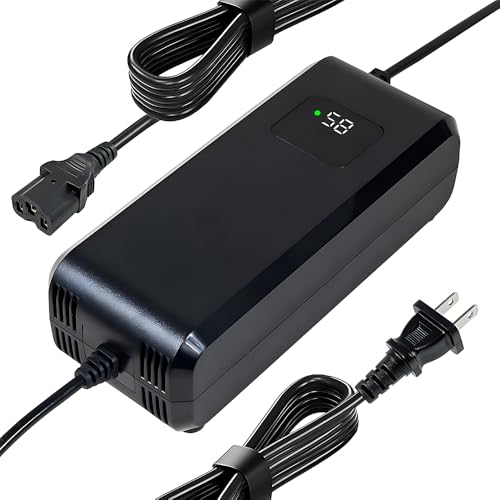
Best for 48V lead-acid battery packs such as AGM or GLE variants, with a 59V output at 4A. It includes a built-in fan for heat dissipation and safety protections, plus a display that helps monitor charging progress. The charger is suitable for specific lead-acid configurations and may not fit all 48V pack types; ensure your pack matches the 58V/59V charging target before purchasing.
48V Lithium Battery Charger – UL Certified

Best for UL-certified 48V lithium battery charging with smart temperature control and a fire-resistant case. This charger targets 48V Li-ion packs used in electric bikes, scooters, and similar platforms. It is not compatible with non-48V chemistries. The UL certification implies a focus on safety standards, but buyers should verify battery specifications to confirm compatibility and avoid using with incompatible packs.
Buying Guide
What battery chemistry does your system use?
- Lead-acid: Choose chargers labeled for lead-acid and verify compatibility with your specific pack (sealed, SLA, or flooded).
- LiFePO4: Pick chargers designed for LiFePO4 chemistry to ensure proper voltage and longevity.
- Li-ion / Li-poly: Look for chargers with appropriate voltage (often around 54.6V or 58.4V depending on pack) and built-in protections.
What is your input voltage range?
- Many 48V chargers accept 100-240V input, which is convenient for international use or travel. If your outlet is fixed to 110V or 120V, confirm that the unit supports your region.
How fast do you need charging?
- Higher amperage (A) charges faster but may generate more heat. LiFePO4 packs can benefit from higher-current charging if the battery management system supports it.
- Consider a charger with smart protections to balance speed and battery health.
What protections matter most?
- Over-charge and over-temperature protection minimize risks to battery life and safety.
- Short-circuit, surge, and fire-safety features are important, especially for high-capacity packs.
- A built-in display or indicators can help monitor progress and prevent overcharging.
Portability and compatibility
- If you travel or move your charger between vehicles, prioritize compact builds with stable bases or anti-slip feet.
- Check that the connector matches your battery’s charging port (5.5×2.1mm, 2.1mm, XLR, etc.).
Maintenance and user considerations
- Keep the charger away from moisture and high heat. A fan helps with heat dissipation for some models.
- Never mix battery chemistries in a single charging setup. Use the charger that matches your pack’s chemistry.
FAQ
- Q: Can I use a 54.6V charger on a 48V battery? A: Not reliably; voltage differences can cause undercharging or overcharging depending on the BMS and battery chemistry. Verify compatibility before use.
- Q: Are these chargers universal for 48V packs? A: Some are designed for specific chemistries (lead-acid, LiFePO4, Li-ion) and specific pack voltages. Always confirm battery type and voltage.
- Q: Do chargers include safety certifications? A: Several listed models emphasize UL or safety protections; check product listings for certification details.
- Q: Is auto shut-off common? A: Yes, several models feature automatic shut-off after full charge to prevent overcharging.
- Q: Should I use a dedicated charger for each pack? A: Yes, using the charger designed for your pack’s chemistry and voltage maximizes safety and longevity.