Finding the right 4-post rack enclosure helps protect servers, switches, and network gear while keeping access simple. This guide highlights five solid options, showing who each is best for, plus practical buying considerations. Ideal buyers include small-to-mid sized IT rooms, clean rooms with limited space, and anyone needing durable, adjustable-depth frames to fit varied equipment sizes.
Summary of chosen products at a glance:
- Raising Electronics 42U Open Frame Rack, 82″ Height — Best for large-scale equipment and maximum storage potential.
- Raising Electronics 27U Open Frame Rack, 56″ Height — Best for compact data closets with moderate load.
- NavePoint 42U Open Frame Rack, 79″ Height — Best for versatile depth options and mobility with casters.
- Raising Electronics 15U Open Frame Rack, 36″ Height — Best for small setups or upgrade-friendly spaces.
- TRIPP LITE 4-Post Shelf (Heavy Duty) — Best for adding sturdy mounting within 4-post enclosures when shelves are needed.
Raising Electronics 42U Open Frame Rack, 82 Inch
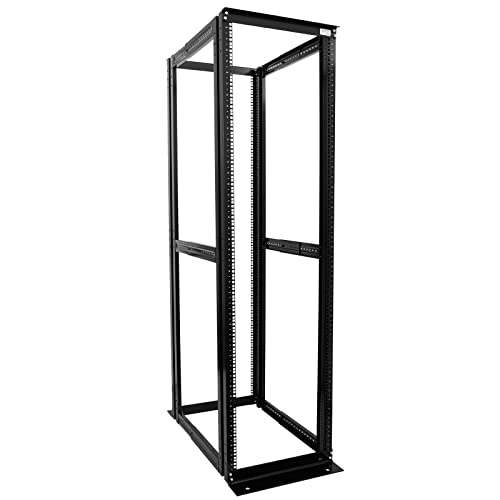
Best for: Full-scale data centers or labs requiring maximum equipment density. Why selected: This model offers a very high 42U capacity, adjustable depth, and a sturdy aluminum build for heavy equipment. It is a free-standing rack with a post-to-post depth range to accommodate various 19″ devices. Limitation: Heavier weight may require floor reinforcement and handled installation.
Raising Electronics 27U Open Frame Rack, 56 Inch

Best for: Smaller IT rooms needing reliable 19″ equipment mounting with depth flexibility. Why selected: This enclosure provides a robust 27U capacity with adjustable depth to fit different servers and network devices. It remains light enough for frequent rearrangements. Caution: Slightly lower capacity than larger models, so plan future growth accordingly.
Raising Electronics 36U Open Frame Rack, 79 Inch Height

Best for: Medium-to-large deployments needing substantial expansion without a full-height cabinet. Why selected: The 36U capacity and adjustable depth make it versatile for servers, switches, and patch panels. It balances capacity and footprint well. Limitation: As with other open-frame racks, cable management requires attention to safety and airflow.
NavePoint 42U Open Frame Rack, Adjustable Depth

Best for: IT environments needing mobility and depth versatility. Why selected: This 42U rack uses cold-rolled steel with a black powder coat, supports up to 881 lbs, and offers preset depths (600mm, 800mm, 1000mm). It comes with casters to aid repositioning. Caution: Open-frame design may require additional cable management solutions to protect equipment from dust or incidental contact.
Raising Electronics 15U Open Frame Rack, 36 Inch Height

Best for: Small offices or branch locations with limited floor space. Why selected: The 15U capacity with a compact 36″ height fits smaller equipment loads and allows future expansion in a single enclosure. Limitation: Lower capacity means fewer devices per rack and potentially more racks needed as equipment grows.
Tripp Lite 4-Post Heavy Duty Fixed Shelf
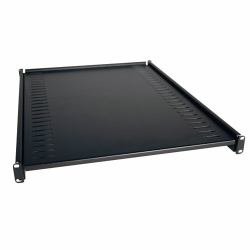
Best for: Enhancing 4-post enclosures with sturdy mounting surfaces. Why selected: This heavy-duty fixed shelf supports up to 250 lbs, making it ideal for mounting non-rack devices inside 4-post enclosures. Caution: Not a full enclosure; requires a compatible rack frame to be effective.
Buying Guide: Key Purchase Considerations
- Capacity needs: Plan for current equipment plus future growth. Higher U-rated racks accommodate more servers and patch panels in one enclosure.
- Depth and space: Adjustable-depth frames help fit devices of varying sizes and optimize airflow. Choose 600–1000 mm preset depths when possible.
- Material and build: Steel and aluminum provide strength; check weight ratings to ensure the rack supports all devices plus cable management hardware.
- Mobility vs. stability: Casters add mobility for repositioning; fixed racks offer greater stability. Consider mixed spaces where relocation is common.
- Open frame vs. enclosed: Open-frame racks maximize airflow and accessibility but require cable-management care and dust protection. Enclosed models offer some protection but may restrict airflow.
- Cable management: Look for cage-nut mounting, square holes, and rear cable access features to simplify wiring and organization.
- Compatibility: Ensure 19″ rack compatibility with your devices and that post-to-post depths align with your equipment footprints.
FAQ
- What is a 4-post rack enclosure? A four-post rack enclosure is a frame-based cabinet or open-frame structure that uses four vertical posts to mount 19″ equipment, offering flexibility in depth and layout.
- How do I choose the right depth for a 4-post rack? Measure the deepest device in your stack, add space for airflow and cabling, and select a rack with adjustable or preset depths that cover that range.
- Are open-frame racks better than enclosed racks? Open-frame racks provide superior airflow and easier access, while enclosed racks offer more protection and security but may restrict airflow if not designed for cooling.
- Can I add shelves to a 4-post rack? Yes. Heavy-duty fixed shelves can be placed inside 4-post enclosures to support non-rack devices and to add mounting surfaces.
- What about caster wheels? Casters improve mobility in data closets and office IT rooms but ensure some wheels have brakes to lock the rack in place during operation.
- Is weight capacity important? Yes. Check the total weight rating to ensure the rack can safely hold all equipment with some headroom for future expansion.