Answering the common buyer question: which 4-panel solar system fits my needs? This guide highlights five practical 4-panel configurations that cover home backup, RV power, and camera security. Each option is described with who it’s best for, what to expect, and potential limits. The top picks balance ease of setup, efficiency, and expansion potential for American households and outdoor use.
Summary of selected products
| Product | Use Case | Best For | Notes |
|---|---|---|---|
| Renogy 400 Watt Premium 4-Panel Kit | Grid-t-tied off-grid readiness | Home backup/boondocking | High efficiency; included MPPT controller |
| Callsun N-Type 400W Solar Panel (4×100W) | Compact, space-saving installs | RVs, rooftops, small cabins | 16 busbars; high efficiency |
| ECO-WORTHY 7.168KWH 800W Kit for RV | All-in-one RV off-grid | Off-grid travel, mobile power | Includes inverter and battery bank |
| REOLINK 4K Solar Security Camera System | Outdoor surveillance | 24/7 security with solar power | Wireless, local storage |
| ECO-WORTHY 48V Off Grid 1600W Complete Kit | Home backup with high power | Homes and outbuildings | UL-safety compliant; real-time monitoring |
Renogy 400 Watt Premium 4 Panels Kit

The Renogy Premium Kit uses four 100W panels and includes a 40A MPPT charge controller, Bluetooth module, fuse, mounting Z brackets, adaptor kit, and tray cables. It targets buyers seeking a reliable grid-tied or off-grid solution with straightforward installation. The panels feature high-strength glass and a robust frame designed to withstand wind and snow loads. Best for homeowners or campers who want strong daily output and a clear upgrade path with MPPT efficiency.
Best for: Homeowners building a reliable backup or small off-grid system; campers and RV users who need solid efficiency and simple wiring. Limitation: The kit is heavy and installation may require some outdoor mounting space and electrical awareness.
Callsun N-Type 400W Solar Panel (4×100W)

This four-pack uses N-Type monocrystalline cells delivering up to 25% efficiency, with 16 busbars for improved current transfer. It is compact for rooftop or RV installations and includes pre-drilled holes for quick mounting. Best for space-constrained setups where higher efficiency per panel matters. Limitation: The four-panel arrangement is effectively 400W total; consider storage and inverter capacity to ensure adequate daily output.
LINOVISION 4-in-1 Solar System for Cameras and IoT
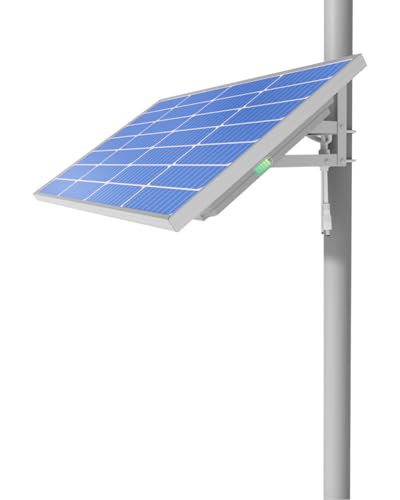
LINOVISION offers a 4-in-1 setup with an 80W solar panel, 12V 40A lithium battery, charge controller, and RS485 monitoring. It targets security cameras and IoT devices requiring compact, reliable power. Best for security deployments where continuous monitoring and remote management are valuable. Caution: 80W is modest; ensure the load aligns with device consumption and seasonal sun exposure.
ECO-WORTHY 48V Off Grid Solar System Complete Kit

This 4-panel kit includes 195W N-type bifacial panels, a 48V 3500W inverter, and an 80A MPPT controller with WiFi. It is designed for home backup and off-grid power with strong safety certifications. Best for larger homes or cabins needing robust daytime generation and 110/120V AC output. Limitation: More complex wiring and monitoring can require professional setup; ensure compatibility with your existing electrical system.
ECO-WORTHY 7.168KWH 800W Solar Kit for RV

Designed for RV life, this 800W kit includes four 200W panels, a 3000W inverter charger, and a battery bank. It emphasizes rapid power delivery and UPS-like switching for RV appliances. Best for travelers and campers who require reliable off-grid power on the road. Limitation: RV use requires space and secure mounting; verify vehicle compatibility and weight limits.
Buying Guide: Key Purchase Considerations
- Placement and space: Assess roof or outdoor mounting areas. Higher efficiency panels save space but may come with higher cost.
- Inverter and charge controller: Ensure the controller’s MPPT rating matches your system’s voltage and battery setup. An inverter should handle peak surge loads for essential appliances.
- Battery compatibility: Decide between lead-acid, lithium, or other chemistries. Lithium typically offers deeper cycles and lighter weight.
- Expandability: Choose kits that allow adding more panels or higher-capacity storage in the future.
- Monitoring: Look for Bluetooth, WiFi, or RS485 monitoring to track performance and health.
- Certifications and safety: Verify UL or equivalent safety standards for components and wiring.
Frequently Asked Questions
- What is the advantage of a four-panel system?
– It provides a compact, scalable footprint with balanced power for small to medium energy needs. - Can a four-panel kit power a whole home?
– It depends on daily energy use, weather, and storage; most four-panel kits are best for backup or supplemental power rather than full-time home use. - Do I need professional installation?
– For rooftop or vehicle installations, professional wiring is recommended to ensure safe integration with inverters and battery banks. - What is MPPT and why is it important?
– MPPT (maximum power point tracking) optimizes energy harvest from panels, improving efficiency in variable sunlight and temperatures. - Is lithium better than lead-acid for these packs?
– Lithium offers lighter weight and more charge cycles, but initial costs are higher; match to your maintenance preferences and budget.