Finding the right 32-port gigabit PoE switch means balancing PoE power, uplink options, smart features, and ease of management. The following selections cover managed and unmanaged options, with a focus on 32-port capabilities and robust PoE budgets suitable for IP cameras, phones, and wireless access points. Each option is evaluated for scalability, security features, and deployment flexibility across small offices, retail, and home labs.
Summary of chosen products
| Product | Ports | PoE Budget | Uplink/SFP |
|---|---|---|---|
| TP-Link TL-SG1428PE | 24 PoE+, 2 non-PoE | 250W | 2 SFP |
| TP-Link TL-SG3452P | 48 PoE+ (with 52 ports total) | 384W | 4 SFP |
| NICGIGA 24-Port PoE | 24 PoE+, 2 uplink + 1 SFP | 300W | 1 SFP |
| Tenda TEG1128P | 24 PoE+ + 4 non-PoE (total 28 ports noted in model) | 370W | 2 SFP/Uplink options |
| NETGEAR GS724TP | 24 PoE+, 2 non-PoE | 190W | 2 SFP |
TP-Link TL-SG1428PE 24-Port PoE+ Switch

The TL-SG1428PE is a 24× PoE+ managed switch with a total POE budget of 250W and 2 non-PoE ports plus 2 SFP slots. It supports 802.3at/af PoE+, delivering up to 30W per port, which is ideal for IP cameras, access points, and VoIP phones. The Easy Smart management interface enables network monitoring, QoS, VLANs, and IGMP for efficient multicast management. With auto-recovery and a robust VLAN feature set, this model is suitable for mid-sized setups that require scalable PoE provisioning and centralized control.
TP-Link TL-SG3452P 48-Port Gigabit L2+ Managed PoE Switch

The TL-SG3452P expands into a larger 48-port PoE+ configuration with a total PoE budget of 384W and 4 Gigabit SFP uplinks, making it a strong choice for larger deployments requiring more PoE ports and higher uplink density. It supports Omada SDN for centralized management across devices and sites, plus cloud access for remote administration. This model is appropriate for growing networks that want scalable PoE, VLAN control, and integrated Omada features.
NICGIGA 24-Port Gigabit PoE Switch

The NICGIGA 24-Port PoE Switch delivers 24 PoE+ ports with a 300W total budget and includes 2 Gigabit uplink ports plus 1 SFP option. It is a plug-and-play unmanaged switch that provides simple setup with auto MDI/MDIX. This is a practical option for smaller installations where quick deployment and stable PoE power are the primary requirements, without the need for extensive network configuration.
Tenda TEG1128P 28-Port Gigabit PoE Switch
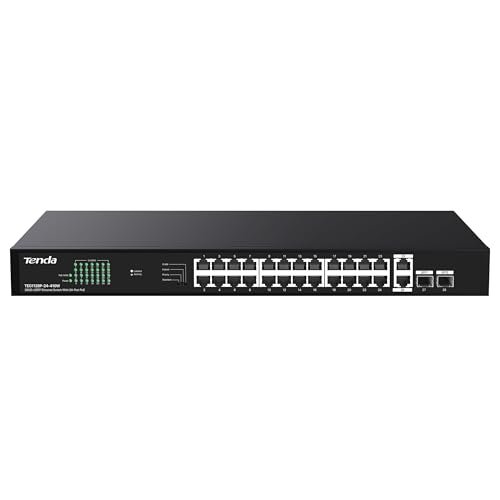
The Tenda TEG1128P is a 28-port PoE-enabled switch featuring 24 PoE ports and 410W total PoE budget, with 2 Gigabit uplinks and 2 SFP slots. It supports Plug & Play deployment and includes One-Key VLAN/Priority/Extend mode, making it suitable for offices needing quick setup with VLAN segmentation and QoS for video and voice applications. Its metal build supports desktop, rack, or wall mounting for flexible placement.
NETGEAR GS724TP 26-Port PoE Gigabit Switch

The NETGEAR GS724TP provides 24 PoE+ ports with a 190W power budget and 2 SFP uplinks. It features a smart software suite and optional Insight cloud management for centralized control and monitoring. This model is well-suited for small to medium deployments that demand reliable PoE power distribution and cloud-based management capabilities with a familiar NETGEAR interface.
Buying Guide: Key Purchase Considerations
- PoE Budget and Port Density: Ensure the total PoE budget matches the number of PoE devices you will power. Higher budgets support more cameras and APs per switch.
- Uplink Flexibility: SFP or 10G options are important for growth. Consider switches with multiple SFP slots for future fiber or high-speed links.
- Management and Networking Features: For larger deployments, look for VLAN support, QoS, IGMP Snooping, LACP/LAG, and software-defined networking (SDN) integration if you plan centralized control.
- Deployment Environment: Fanless and silent designs suit offices and labs, while active cooling may be necessary in racks or hot environments.
- Rack Compatibility and Form Factor: Verify mounting options (rack, desktop, or wall) and space requirements for your setup.
- Future-Proofing: If you expect network growth, consider switches with scalable features like Omada, Insight cloud management, or centralized SDN integration.
- Warranty and Support: A longer warranty and reputable vendor support help ensure reliability in business contexts.