Looking for compact, high-torque gear motors that run at about 30 RPM? This guide highlights five top choices that balance durability, efficiency, and ease of installation. Best for hobbyists, RC enthusiasts, small robotics, and educational kits, these motors are selected for steady low-speed performance and solid metal gearing. The summary table below helps you compare core specs at a glance.
| Product | Voltage | Rated Speed | Gear Type | Best For |
|---|---|---|---|---|
| Greartisan 12V 30RPM Gear Motor (DC) | 12V | 30 RPM | All-metal gears | High-torque, compact builds |
| Jersvimc 12V 30RPM High Torque DC Motor | 12V | 30 RPM | All-metal gears with worm reducer | Deep-low-speed torque |
| Antrader GA12-N20 30 RPM | DC 6V | 30 RPM | Metal gear reduction | Budget-friendly micro robot builds |
| BRINGSMART JGY-370 12V 30RPM Worm Gear | 12V | 30 RPM | All-metal gears, worm | Self-locking torque and compact form |
| DORHEA 12V 30RPM Gear Motor (N20 style) | 12V | 30 RPM | All-metal gears | DIY RC toys and small machines |
Greartisan 12V 30RPM Gear Motor High Torque
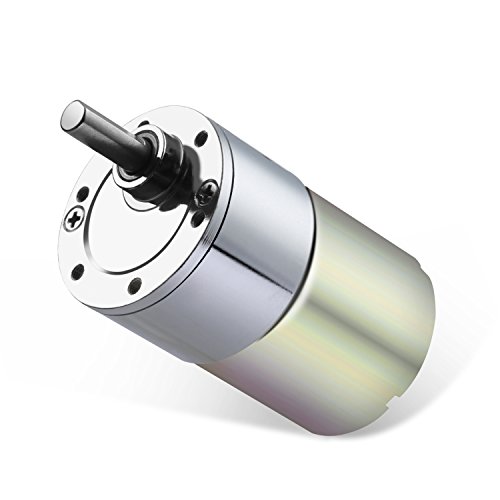
The Greartisan DC motor features all-metal gears and a pure copper wire core rotor, designed to deliver higher torque and improved efficiency. The D-shaped output shaft, made from high-hardness steel, enhances bearing support and durability. This model is best for projects requiring robust gearing in a compact footprint, such as small robotic arms or hobby machines. A potential limitation is that it is a higher-torque unit, which may necessitate careful motor mounting to manage heat under sustained operation.
Jersvimc 12V 30RPM High Torque DC Motor

This motor emphasizes high torque in a compact 3″ x 1.5″ package with all-metal gears and a copper wire core to boost power transfer. The worm-gear reduction helps achieve very low speeds with stable output. It is well-suited for compact robotics, RC devices, or automation subassemblies where space is limited. Best for installations needing precise low-speed drive; choose this if you need a longer axial length and vertical shaft alignment. Limitation: wiring and mounting must account for its slightly taller form factor compared with non-worm options.
Antrader 30 RPM DC 6V Geared Motor GA12-N20
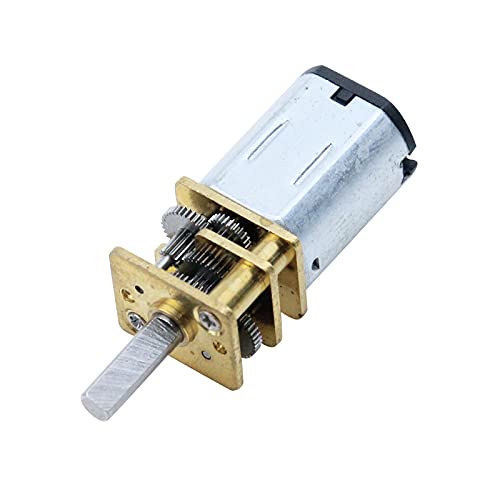
The Antrader GA12-N20 is a lightweight, all-metal gear motor with a 3 mm long shaft and simple two-terminal connection. The gear train aims for high torque relative to its small size, making it ideal for micro-robotic projects, DIY engines, or model builds. Best for beginners and educational kits due to its straightforward integration. A caution: current draw can vary under load, so ensure your power supply can handle peak requests.
BRINGSMART JGY-370 12V 30rpm Worm Gear

BRINGSMART’s 12V JGY-370 model uses a turbo worm gear with all-metal construction and a D-shaped shaft. The worm gear design offers self-locking torque characteristics, useful for holding loads without back-drive. This makes it a solid choice for toys, models, or small conveyors where motion locking is desirable. Consider that worm gears can heat up under continuous duty; ensure adequate ventilation and current management.
DORHEA 12V 30RPM Gear Motor (N20 Style)

The DORHEA dual-pack offers micro gear motors with full-metal gearing and a compact flat output shaft. This option suits DIY RC toys, micro-robots, and other small devices that require steady low-speed motion with strong torsion. Best for projects needing multiple motors in parallel to drive small assemblies. Limitation: current ratings are modest; heavier loads may require additional torque or gearing adjustments.
Buying Guide: Key Purchase Considerations
- Voltage compatibility: Most motors here operate at 12V, with one occasional 6V option. Match your project’s power source to avoid over- or under-driving the motor.
- Gear type and output: All-metal gears provide durability and heat resistance. Worm gears deliver very low speeds with self-locking properties, while D-shaped shafts support robust mounting.
- Torque vs. size: Higher torque typically means longer or bulkier motors. Choose a form factor that fits your chassis while meeting load requirements.
- Mounting and connection: Consider shaft length/type, mounting brackets, and wire connectors. Quick-release or screw-in mounting helps streamline integration.
- Heat and duty cycle: Continuous operation can heat motors. Ensure adequate ventilation or duty-cycle planning for higher-torque models.
- Wiring and control: Some motors imply direct DC operation; others may need driver circuits or PWM control. Plan for power management and speed control.
- Cost vs. performance: Metal-geared units offer durability but may be pricier. Balance budget with intended application and expected lifespan.
Frequently Asked Questions
- What does 30 RPM mean for a gear motor? – It indicates the motor’s output shaft speed at no-load or specified operating conditions, useful for precise low-speed applications.
- Are all-metal gears better? – Generally, yes for durability and heat resistance, especially in high-torque or continuous-use scenarios.
- When should I choose a worm gear motor? – Choose worm gears for very low speeds and self-locking properties, useful for holding a line or position without back-driving.
- Can these motors be used in RC or robotics projects? – Yes, they are commonly used in micro-robotics, RC toys, and small automation tasks requiring compact low-speed motion.
- Do I need a motor driver? – Depending on your control method, you may need a driver or PWM controller to regulate speed and torque safely.
- What should I check before buying? – Verify voltage, torque, shaft type, mounting compatibility, and whether the motor’s duty cycle fits your project’s usage pattern.