Protect livestock, deter predators, and secure large pastures with high-performance 30-mile electric fence chargers. This guide reviews top 30-mile models, comparing power output, solar capabilities, durability, and ease of installation. Whether you run a small operation or a sprawling ranch, these Energizers are designed to deliver reliable perimeter security across challenging environments.
The table below highlights five recommended models and their key attributes to help you choose quickly. All options support long-range fencing with robust low-impedance output, suitable for various fence types and weather conditions.
| Product | Brand | Best For | Output Type | Power Source |
|---|---|---|---|---|
| MARK8 Low Impedance 30-Mile Charger | Parmak | Indoor use, livestock and predator control | Low impedance, 30 miles | AC 110/120V |
| ANDMON MINI400 30 Miles Solar Charger | ANDMON | Solar-powered, versatile for various settings | 0.4 Joule output | Solar & DC |
| FarmNix 6-12KV Solar Fence Charger | FarmNix | Adjustable energy, 30 miles, all-weather | 0.3–1.5 Joules | Solar |
| 30-Mile Solar Fence Charger (Epoify) | Epoify | Large perimeter with smart display | 0.3–1.5 Joules | Solar |
| Zareba 50 Mile AC-Powered Charger | Zareba | Heavy weed conditions, large properties | Low impedance, up to 50 miles | AC |
Parmak MARK8 Low Impedance 30-Mile Charger

The Parmak MARK8 delivers a low-impedance AC 110/120-volt output capable of covering up to 30 miles. It combines solid-state circuitry with built-in performance metering and is designed to shock through wet vegetation. Ideal for livestock enclosures and predator-control applications, it’s UL-listed for US and Canada usage and manufactured in the USA. Installation focuses on indoor environments where weather exposure is minimal.
ANDMON MINI400 30 Miles Solar Charger

ANDMON MINI400 uses a low-impedance design with 0.4 Joules output to power about 10 miles of fencing, depending on wire type and strands. It features Day/Night Mode to optimize energy use and supports both solar power and DC charging. Easy to install and compatible with various post styles, it suits pastures, barns, and remote sites where grid access is limited.
FarmNix 6-12KV Solar Fence Charger

FarmNix offers 30-mile range with adjustable output energy ranging from 0.3 to 1.5 Joules and 6KV–12KV output voltage. The solar-powered system includes a 15W solar panel and a 12V 7Ah battery, delivering 24-hour protection with day/night modes. It’s built for harsh weather and winter conditions, with waterproofing and tolerance to extreme temperatures, making it suitable for large, remote farms.
30-Mile Solar Fence Charger (Epoify)
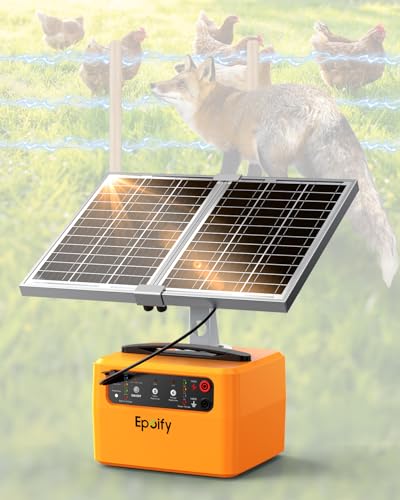
Epoify’s 30-mile solar charger provides adjustable energy output from 0.3 to 1.5 Joules, suitable for various livestock and perimeter needs. It includes a 12,000 mAh battery for extended operation and a smart voltage display to monitor performance. The unit emphasizes portability and long-distance coverage, making it a strong option for farms with fluctuating sun exposure.
Zareba 50 Mile AC-Powered Low Impedance Charger

Designed for large properties and challenging weed conditions, Zareba’s 50-mile AC-powered charger offers low-impedance performance and compatibility with high-tensile, polywire, and polytape fencing. It’s optimized for big pastures and heavy weed scenarios, providing strong deterrence and reliable energy delivery across extensive perimeters.
Zareba 25 Mile AC Powered Low Impedance

While rated at 25 miles, this Zareba charger remains popular for smaller smart farms facing weed challenges. It provides consistent low-impedance energy suitable for multiple fence types and is a practical mid-range option for farms that demand reliable performance without the largest perimeter demands.
Buying Guide: Key Considerations For Choosing A 30-Mile Fence Charger
- Output energy and voltage: For 30-mile coverage, look for adjustable joules (0.3–1.5 J is common) and a stable kilovolt range to deter predators and prevent fence breaches.
- Impedance and pulse stability: Low-impedance energizers deliver power more consistently over long fences and through weeds, which improves reliability on rugged properties.
- Power source and location: Solar-powered units are ideal for remote sites; AC-powered models suit fenced areas with steady electricity access. Consider hybrid options for year-round operation.
- Weather resilience: Waterproof housings, temperature tolerance, and robust construction extend service life in rain, snow, and heat.
- Fence compatibility: Ensure compatibility with your fence type (tence, polywire, polytape) and post systems (T-posts, wooden posts) for straightforward installation.
- Maintenance and monitoring: Built-in performance meters, voltage displays, and easy-to-service components help track system health and reduce downtime.
- Safety and compliance: Look for UL listings (where available) and clear safety guidelines to protect animals and handlers.
- Size and weight: Lighter, portable units suit temporary fencing or varied layouts; larger models are better for permanent installations across long perimeters.
- Cost of ownership: Consider solar panels, batteries, and potential replacement parts when evaluating long-term value and reliability.
When selecting a 30-mile charger, balance perimeter size, environmental conditions, and energy needs. A solar-powered model with adjustable joules and a robust battery is often the best compromise for movable pastures or remote lots, while a high-capacity AC charger excels on larger operations with reliable electrical access. Always review installation requirements and post type compatibility to ensure optimal performance.