When safeguarding electrical systems, 3-pole shunt trip breakers provide reliable external tripping to quickly disconnect power during emergencies. This guide highlights five top options, focusing on 120-Volt shunt trip functionality and three-pole configurations that fit 120/240-Volt applications. Each product is described with its key features to help you compare performance, compatibility, and installation considerations for American panels and electrical setups.
| Product | Brand | Current (A) | Trip Type | Voltage |
|---|---|---|---|---|
| Q32000S01 3P | Siemens | 20 | Shunt Trip | 120/240 |
| Q35000S01 3P | Siemens | 50 | Shunt Trip | 120/240 |
| Q310000S01 3P | Siemens | 100 | Shunt Trip | 120/240 |
| Q34000S01 3P | Siemens | 40 | Shunt Trip | 120/240 |
| 3P 60A Shunt Trip | Siemens | 60 | Shunt Trip | 240 |
Siemens Q32000S01 3P 20A Shunt Trip Breaker
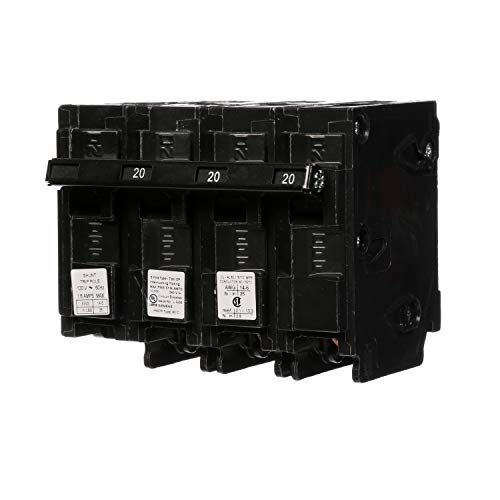
The Siemens Q32000S01 is a 3-pole MP-T style circuit breaker rated at 20 amps with a 120-Volt shunt trip. It occupies the space of four poles, simplifying panel layout while providing external tripping capability for enhanced safety. This UL Listed device supports 120/240-Volt operation, making it suitable for residential and light commercial panels that require quick isolation in emergencies. Its three-pole design ensures coordinated protection across all phases in multi-wire branch circuits.
Siemens Shunt Trip 3P 50A 240V Breaker

This Siemens 3P 50A shunt trip breaker is designed for 120/240-Volt operation with a three-pole format. It provides 120-Volt externally activated tripping, enabling rapid shutdown in response to control signals or safety interlocks. The listing indicates compatibility with Siemens products and emphasizes external trip functionality, making it suitable for protection schemes in commercial or industrial electrical distributions where quick disconnection is critical.
Siemens Q35000S01 3P 50A Shunt Trip

The Q35000S01 is a 3-pole MP-T 50-amp circuit breaker with a 120-Volt shunt trip. It supports 120/240-Volt operation and shares the same space-saving design as other MP-T breakers (occupying the space of four poles). UL Listed for safety and reliability, this unit is suitable for applications requiring fast external tripping alongside standard overcurrent protection.
Siemens Q310000S01 3P 100A Shunt Trip

With a 100-amp rating, the Q310000S01 provides high-current protection in three-pole configurations. It features a 120-Volt shunt trip for external activation and is suitable for 120/240-Volt systems. The unit takes up the space of four poles, offering a compact solution for dense panel layouts while delivering dependable protection for larger loads or distribution sections.
Siemens 3P Shunt Trip Bolt On Circuit Breaker 60A

This 3-pole 60-amp bolt-on breaker by Siemens comes with a 120-Volt shunt trip feature for externally triggered disconnection. It is described as new surplus and is built to fit Siemens bolt-on panel configurations. The unit’s emphasis on external trip capability makes it a solid choice for integrated safety systems and emergency shutdown schemes in larger commercial environments.
General Electric Thqb32030st1 3P 30A Shunt Trip

The GE THQB32030ST1 offers a 3-pole 30-amp bolt-on configuration with a shunt trip. While marketed under a different brand, it demonstrates similar external tripping capabilities compatible with 120/240-Volt systems. This option can be considered in mixed-brand installations where external control signals are integrated with traditional overcurrent protection.
Siemens Q34000S01 3P 40A Shunt Trip

The Q34000S01 provides 40-amp three-pole protection with a 120-Volt shunt trip. It occupies the same four-pole space as its MP-T counterparts and is UL Listed for safety in 120/240-Volt circuits. This model is suitable for commercial panel boards and installations requiring reliable external disconnection during fault or hazard events.
Buying Guide
Key considerations when selecting a 3-pole shunt trip breaker:
- Current rating: Choose a rating compatible with the connected load and panel specifications. Higher amperage units are suited for larger feeders or motor loads, while lower ratings fit lighting or small equipment circuits.
- Shunt trip voltage: Most 3P breakers use 120-Volt shunt trip to trigger external signals. Ensure your control circuit matches this requirement and that wiring supports safe, remote activation.
- Voltage range: Verify 120/240-Volt operation for your application. Some panels require MP-T type breakers that fit the panel’s physical space and pole count.
- Pole configuration: Three-pole breakers protect all phases in a three-phase system. Confirm the panel accepts 3P MP-T or bolt-on configurations and that the physical footprint aligns with your enclosure.
- Installation method: Bolt-on vs. plug-in styles affect mounting hardware, panel compatibility, and serviceability. Bolt-on units are common in older or industrial panels, while plug-in variants fit modern boards.
- Safety and approvals: Look for UL listings and compatibility with your panel brand. Mixed-brand installations should be approached with caution to maintain coordinated protection and warranty terms.
- Space management: Some shunt trip breakers occupy the space of four poles even though they are 3-pole devices. Plan for panel space accordingly to maintain balance and accessibility.
- External control integration: If you plan to integrate with building automation, ensure the shunt trip feature is compatible with your control system and that wiring conforms to local electrical codes.
- Maintenance and spare parts: Availability of replacement coils, trip mechanisms, and surge protection options can influence long-term reliability and downtime.
When evaluating options, compare the external trip activation method, the intended environment (residential, commercial, or industrial), and how each unit’s footprint aligns with your panel’s configuration. Although the focus here is on Siemens models, other brands like Square D and GE offer comparable 3P shunt trip breakers that may fit specialized installations. Always consult the panel’s documentation and a licensed electrician to verify compatibility and safety requirements before purchase and installation.