Choosing a 3 HP dust collector motor or a system around that power level can dramatically improve dust control in a mid-sized woodshop. This guide highlights top-performing units designed to deliver strong airflow, reliable filtration, and scalable setups. Each option below features a solid motor rating, solid build quality, and features that help reduce chips and fine dust. Use the buying guide to compare specs, compatibility, and installation considerations to find the best fit for your tools and workflow.
| Product | Motor Power | Airflow (CFM) | Inlets / Capacity | Brand | Link |
|---|---|---|---|---|---|
| Shop Fox W1687 | 3 HP | 2,800 CFM | 4″ inlet, 10.8 cu ft bag | Shop Fox | Amazon |
| VEVOR 3.0HP System | 3.0 HP | 1,550 CFM | Two 35-gal bags, 42-gal filter bags | VEVOR | Amazon |
| JET JCDC-3 | 3 HP | 2-Micron Filter | 2.0 micron filtration, 230V | Jet | Amazon |
| Powermatic PM1900TX-CK1 | 3 HP | 2-Micron Canister | Remote timer, TurboCone | Powermatic | Amazon |
| Oasis DC5000 | 5 HP | 3,450 CFM | Large capacity, 3-way inlets | Oasis Machinery | Amazon |
Note: The list prioritizes units with robust 3 HP-class motors suitable for mid-sized shops. All links point to product pages for reference; details may evolve with new model revisions.
Shop Fox W1687 3-HP Dust Collector

The Shop Fox W1687 delivers strong airflow with a 3-HP motor and a rated 2,800 CFM, designed to handle medium to heavy woodworking tasks. It features powder-coated paint for durability and a bag capacity of 10.8 cubic feet. Its performance is supported by a solid static pressure of 14.4 inches, enabling efficient debris capture across multiple tools connected to the system.
VEVOR Dust Collector 3.0HP System

The VEVOR 3.0HP system emphasizes airflow and filtration efficiency, offering 1,550 CFM airflow for rapid dust removal. It includes two 35-gallon bags and two 42-gallon filter bags for extended operation between changes. The 2.5-micron filtration captures fine dust, supporting a cleaner workshop and lower dust exposure while maintaining productivity on medium to small woodworking tasks.
JET Cyclone Dust Collector 3 HP

The JET Cyclone model provides a high-efficiency filtration approach with a 2-micron canister and a 100% coverage claim for fine particles. It includes remote timer settings to run for 2 to 8 hours and an RF remote control that works up to 50 feet away. This configuration supports precise control and automation in larger shops where dust management integration matters.
Powermatic TurboCone 3 HP Dust Collector
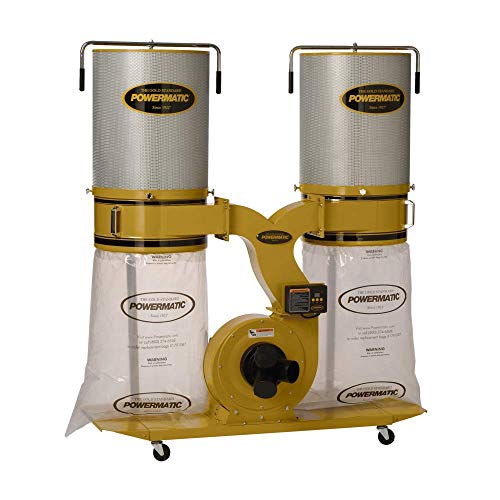
The Powermatic PM1900TX-CK1 uses TurboCone technology to improve chip separation and bag packing efficiency. The 3-HP motor provides robust suction for larger tool setups, and a remote-controlled digital timer (up to 99 minutes) adds scheduling flexibility. The unit’s steel impeller enhances durability and performance across extended operation.
Oasis DC5000 Heavy-Duty 5 HP

The Oasis DC5000 offers a higher horsepower option with 5 HP, suitable for very demanding shops or setups requiring greater air movement (3,450 CFM). It features three 4″ inlets, a 12″ balanced steel radial impeller, and standard 30-micron bag filtration, with a large bag capacity ideal for multi-tool operations and heavy debris loads.
Buying Guide: Key Purchase Considerations And Comparisons
Motor power and airflow are fundamental, but several other factors influence long-term performance and value.
- Horsepower and CFM balance: A higher HP typically supports larger duct networks and longer runs, but ensure CFM remains sufficient for your tool lineup. Match the system to your workshop size and the number of connected tools.
- Filtration and bags: Micron rating (e.g., 1-2 microns) affects fine dust capture. Consider bag capacity and ease of bag changes for downtime savings during extended sessions.
- Inlet configuration and ducting compatibility: Check inlet sizes, potential for multi-tool connections, and whether the system can handle 4″ or larger ducting common in woodworking shops.
- Remote control and timer features: Timers and RF remotes add automation, improving efficiency and safety by ensuring dust collection runs as needed.
- Noise and vibration: Larger units may generate more noise; look for vibration isolation features or quieter operating modes if the workspace has noise restrictions.
- Installation and space requirements: Confirm electrical needs (voltage, phase), footprint, and mounting options. Ensure proper clearances for maintenance and filter changes.
- Maintenance cost and availability: Replacement filters, bags, and impellers vary by brand. Consider the total cost of ownership over several years.
- Scalability: If you plan to add more tools, prioritize systems with inlets suitable for multi-tool connections or with upgrade pathways.
When selecting a 3 HP or near-3 HP dust collector, compare the models based on how frequently you switch tools, the size of your workshop, and your filtration needs. A well-chosen unit reduces airborne dust, protects health, and keeps finishes pristine—especially in woodworking environments where sawdust accumulation is constant.