Home charging efficiency depends on power output, compatibility, and installation flexibility. This guide highlights five high-performance EV chargers that align with the goal of faster 22kW-level charging or close equivalents, spanning different voltages and configurations. Each product is evaluated on installation ease, power delivery, connectivity, and real-world use. Whether you need a single-stand charger, a multi-unit 277/480V setup, or portable options for the driveway, these picks cover common American garage and workspace scenarios.
Overview of selected products:
- PRIMECOMTECH 277/480V 80 Amp Level 2 EV Charger
- Veralini Type 2 to GB/T Adapter for 22kW/7.2kW 3-Phase
- AIMILER Level 2 EV Charger with WiFi App, 32A
- ELEGRP Level 1/2 EV Charger, 16A Portable
- eTimxon 16A Portable Level 2 Charger with 25ft Cable
PrimeCommTech 277/480V 80A Level 2 Charger

The Primecom 80 Amp Level 2 EV Charger is designed for 277/480V service. It can be installed in multi-unit configurations by tying up to three units on a single three-phase circuit without a step-down transformer. This capability makes it attractive for commercial garages or fleet programs seeking maximum AC charging speed. The unit claims up to 75 miles of range per hour, delivering up to 19.2 kWh, with adjustable amperage settings (80A down to 24A in steps). A built-in smartphone app enables session scheduling, energy monitoring, and remote status updates, providing a complete control experience from anywhere.
Key considerations: high-voltage compatibility requires proper electrical planning and conduit routing. The 80A capability means substantial circuit loading, so professional installation and safety clearances are essential. While it offers powerful charging, ensure your building’s service can support potential multi-unit deployment and phase balancing across the 277/480V supply.
Veralini Type 2 To GB/T Adapter For 22kW Charging

This product targets compatibility between Type 2 charging systems and GB/T connectors, enabling 32A/22kW-level charging where applicable. The adapter supports three-phase operation and is useful for users who have Chinese GB/T-equipped vehicles or charging stations but want Type 2 compatibility in a North American context. The listing emphasizes compatibility and the ability to deliver up to 22kW in the appropriate electrical environment, facilitating faster charging where a 3-phase 22kW supply exists.
Key considerations: adapters introduce a layer of complexity and must match the vehicle’s charging protocol and local safety codes. Always verify your EV’s acceptance of GB/T or Type 2 with an adapter, and confirm if 22kW or 7.2kW outputs are achievable in your installation. This is most relevant to users with 3-phase 400V–480V service or commercial charging setups.
AIMILER Level 2 EV Charger With WiFi App

The AIMILER Level 2 charger offers 32A capability with a 25-foot cable, compatible with 220-240V circuits and a NEMA 14-50P plug configuration. It includes app-based control to initiate charging, schedule sessions, and monitor energy use. The product emphasizes ETL safety compliance and J1772 compatibility for North American EVs and PHEVs, noting that Tesla vehicles may require a separate adapter for J1772. Customers can adjust amperage via the app to tailor charging speed to the installed circuit capacity, potentially enabling near-22kW performance in suitable environments when paired with the right infrastructure.
Key considerations: check plug type and required adapters for your EV model. While rated at 32A, actual charging speed depends on the vehicle’s onboard charging capacity and the available electrical supply. This model is ideal for home garages needing a reliable, connected Level 2 charger with remote management features.
ELEGRP Level 1/2 EV Charger, 16A Portable

The ELEGRP charger provides dual charging modes, operating on 120V Level 1 or 240V Level 2 with a 25-foot cord. It features IP67 weather resistance for outdoor use and supports NEMA 6-20 and 5-15 connectors, enabling flexible deployment in residential driveways or outdoor spaces. This model emphasizes reliable conductors for stable charging, with robust thermal management and a design intended to withstand harsh weather. The adjustable amperage supports different circuit ratings, offering practical options for customers who need portable charging across varied outlets.
Key considerations: while portable, ensure you have appropriate outlets and consider long-term battery health when choosing higher-speed Level 2 charging. The unit’s portability is advantageous for renters or temporary installations, but permanent wall mounting may be desirable for consistent use.
eTimxon 16A Portable Level 2 EV Charger
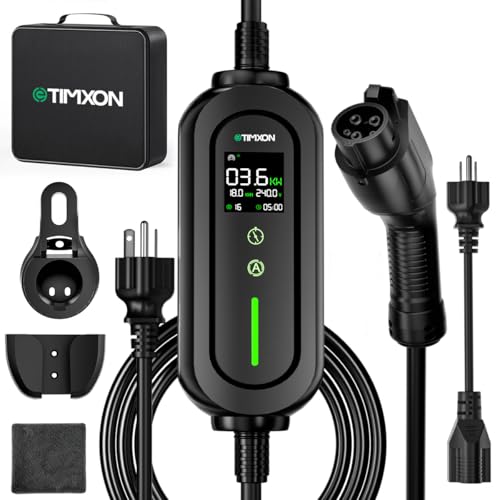
The eTimxon portable Level 2 charger uses a NEMA 6-20 plug for 240V operation, delivering up to 16A (about 3.84kW). It includes a 25-foot cable and a NEMA 5-15 adapter for Level 1 compatibility, making it versatile for travelers and homeowners alike. The unit emphasizes quick setup, simple current and delay-time controls, and broad compatibility with SAE J1772-compliant vehicles. For users seeking moderate Level 2 charging with portable convenience, this model provides a cost-effective solution with reliable performance for everyday EV needs.
Key considerations: real-world charging speeds depend on vehicle acceptance and available outlet amperage. The 25-foot cable length provides flexibility for various parking arrangements, while portability supports temporary setups, curbside charging, and secondary charging locations.
Buying Guide: Key Purchase Considerations For 22kW And High-Power EV Chargers
- Power delivery and compatibility: The 22kW benchmark commonly requires 3-phase power and a vehicle that can accept 22kW charging (up to 32A at 240V, depending on the vehicle). Check your home or site electrical service, whether you have 3-phase availability, and whether your EV supports 22kW charging or is limited to 7.2kW or 11-14kW in practice.
- Voltage and phase: 277/480V systems are specialized for commercial or multi-unit installations. For typical residential setups, 240V single-phase Level 2 chargers with 32A or higher are common. Plan for phase balancing in multi-unit projects to avoid overloading feeders.
- Connector standards: J1772 is standard in North America. GB/T adapters enable cross-compatibility with non-American charging stations but verify safety approvals and local code compliance when using adapters or multi-connector configurations.
- Smart features: Many units offer mobile apps, scheduling, energy monitoring, and firmware updates. Consider whether remote management and real-time usage data are important for you, especially for fleet or shared-use scenarios.
- Installation and safety: High-amperage Level 2 or 3-phase installations require professional electrical work, proper grounding, and compliance with local electrical codes. For outdoor installations, look for IP ratings and weather resistance.
- Portability vs. permanence: Portable Level 2 chargers offer flexibility for renters or variable parking, while hard-wired or wall-mounted units deliver consistent, higher-current charging and cleaner installations for home garages.
- Cost vs. value: Higher power levels often require expensive electrical upgrades and more robust enclosures. Weigh the upfront installation costs against long-term charging speed benefits and the EVs you own or plan to own.
- Vehicle compatibility: Some vehicles have onboard limitations that cap charging speed despite a high-power charger. Verify the vehicle’s onboard charger capacity and charging curve to estimate actual time savings.
- Future-proofing: If you anticipate adding more EVs or upgrading your service, consider a charger and installation path that leaves room for increased amperage or expansion (for example, future 3-phase upgrades or additional units in a shared facility).
These considerations help buyers choose a charger that matches both current needs and future plans, balancing high-kW potential with installation practicality, vehicle compatibility, and ongoing operating costs. The five options above illustrate a spectrum from ultra-high-voltage commercial-capable units to portable Level 2 solutions, providing a range of choices for different homes and workplaces.