Answering the search for reliable 2000W DC to AC power inverters, this guide highlights five top models suited for vehicles, camping, off-grid setups, and home backup. These inverters convert 12V DC into 110–120V AC with pure sine wave output, protecting sensitive electronics and providing steady performance. Best for: RV owners needing steady power for appliances, off-grid users seeking cleaner energy, and travelers who require reliable charging on the road. The following table offers quick comparisons to help you choose quickly.
| Product | Brand | Continuous Power | Peak Power | Key Features | Best For |
|---|---|---|---|---|---|
| BELTTT 2000W Pure Sine Wave Inverter | BELTTT | 2000W | 4000W | Pure sine wave, LCD display, dual AC outlets, USB, remote control | RV and Solar setups needing grid-like power |
| Yinleader 2000W Inverter | Yinleader | 2000W | 4000W | Smart LCD, multiple protection codes, dual USB, full safety protections | Heavy-duty electronics and tools on the road |
| EFFORTWAY 2000W Inverter | EFFORTWAY | 2000W | 4000W | 2 AC outlets, 2 USB ports, high efficiency, LCD with error codes | Camping, travel, off-grid power needs |
| Vansdon 2000W Pure Sine Wave Inverter | Vansdon | 2000W | 4000W | Pure sine wave, LCD, 3 AC outlets, USB-C, remote | RV and full-system solar setups requiring flexible outlets |
| Ampeak 2000W Pure Sine Wave Inverter | Ampeak | 2000W | 6000W | Pure sine wave, dual outlets, remote, 3.1A USB, low THD | Home backup and vehicle power with high surge needs |
BELTTT 2000W Pure Sine Wave Inverter

The BELTTT model delivers 2000W of continuous DC 12V input to 110–120V AC output, with a peak surge up to 4000W for startup loads. It uses a pure sine wave, which is ideal for sensitive devices like TVs and home theater systems. An intelligent LCD shows input/output voltages, battery status, and load in real time. Best for RVs, solar setups, and outdoor use where a stable, grid-like waveform is essential. A potential limitation is that continuous high-load use may require adequate cooling and ventilation.
Yinleader 2000W Inverter with LCD
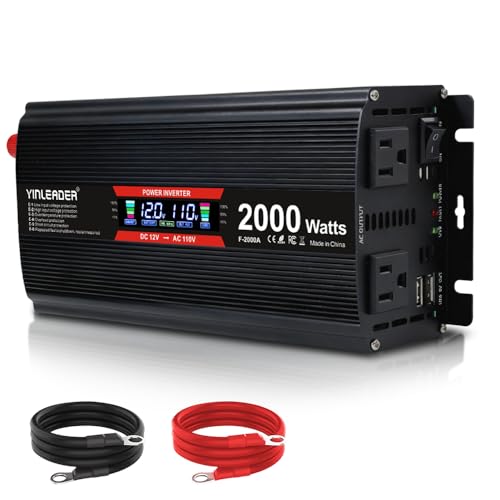
This model emphasizes robust protection and clear feedback through the smart LCD. It provides 2000W continuous power with a 4000W peak, and it includes multiple error codes to aid troubleshooting. It is well suited for heavy-duty electronics, laptops, and tools in vehicles or off-grid environments. Choose this if you want proactive protection and a detailed fault-reporting interface. A caveat is that some users may prefer additional USB-C options for newer devices.
EFFORTWAY 2000W Power Inverter

EFFORTWAY offers 2000W continuous power with a 4000W peak, plus two AC outlets and two USB ports for versatile charging. The unit emphasizes efficiency (over 90%) and features an LCD that shows input/output voltage, battery capacity, load, and error codes for quick troubleshooting. It is well suited for camping and RV setups where multiple devices need outlet flexibility. A potential limitation is the absence of a hardwire port in this variant, which could matter for some installation plans.
Vansdon 2000W Pure Sine Wave Inverter

Vansdon emphasizes pure sine wave output with a typical 3%–4% THD, aiming to protect sensitive loads and extend device lifespans. It includes three AC outlets, a 30W USB-C port, and remote control, making it convenient for RVs and solar-equipped homes. Best for users who need flexible outlet configurations and cleaner power for delicate electronics. A limitation to consider is the heavier power management requirement during long peak uses, so ensure adequate battery capacity and ventilation.
Ampeak Pure Sine Wave Inverter

Ampeak delivers a robust 2000W continuous output with up to 6000W surge. The device offers a pure sine wave with only 3%–4% THD, ensuring stable operation for motors and electronics. It features dual outlets, a remote option, and a 5V USB port, making it versatile for both vehicle and home backup applications. Choose this if high surge tolerance and grid-like power quality are priorities; consider thermal performance during prolonged heavy loads.
Buying Guide: Key Considerations for 2000W DC to AC Inverters
Power needs: Match continuous wattage to everyday loads and verify peak surge for startup equipment. For RVs or off-grid homes, plan for at least 1.5–2x surge capacity.
Waveform: Pure sine wave is preferable for sensitive devices and motors. Modified sine wave can work for simple loads but may cause buzzing or shorter device life.
Voltage stability: Look for inverters with voltage regulation that maintains near 110–120V output across input ranges to protect electronics.
Protection features: Essential protections include overvoltage, undervoltage, overload, short circuit, overheating, reverse polarity, and a remote switch or soft-start capability.
Display and diagnostics: An LCD or LED readout helps monitor input/output voltage, battery level, load, and fault codes, aiding maintenance and troubleshooting.
Outlets and ports: Ensure the unit offers enough AC outlets and USB ports (including USB-C) for your devices. Consider a hardwire port if you need permanent installation.
Build and cooling: Aluminum housings and built-in fans support durability and thermal management in hot environments or extended use.
Battery compatibility: Most 12V systems work with lead-acid or lithium batteries; confirm compatibility if you use LiFePO4 or AGM packs.
FAQ: Fast Answers for Buyers
- What load can a 2000W inverter reliably run? Typically up to 2000W continuous with peaks to 4000W or higher for a few seconds, depending on battery capacity and cooling.
- Is pure sine wave worth it for a caravan or RV? Yes, it minimizes noise, protects sensitive electronics, and extends appliance life compared to modified sine wave models.
- Do these inverters require special batteries? Most work with common 12V battery banks (lead-acid, AGM, or lithium). Check the manufacturer’s guidance for best results with your chemistry.
- Can I mount these in a vehicle? Many models are designed for vehicle use, with portable form factors, but verify clearance, ventilation, and wiring requirements for your setup.
- What protections should I look for? Overload, over/under voltage, short circuit, overheating, reverse polarity, and safe-start features are key.
- Do I need a remote or display? A remote switch and LCD display help with control and diagnostic visibility, especially in mobile environments.