Discover top 20 kWh battery banks designed to store solar energy, power essential appliances, and keep lights on during outages. This guide highlights premium options, their key features, and practical buying considerations to help you compare large-capacity LiFePO4 systems. Below are five strong choices for American homes seeking reliable, scalable energy storage with smart monitoring and robust safety protections.
| Product | Capacity | Chemistry | Monitoring | BMS |
|---|---|---|---|---|
| MFUZOP 20.48kWh (4x 48V 100Ah) | 20.48 kWh | LiFePO4 | Bluetooth App | 100A BMS |
| MFUZOP 20.48kWh (4x 51.2V 400Ah) | 20.48 kWh | LiFePO4 | Bluetooth App | 100A BMS |
| Dawnice 51.2V 100Ah (4 modules, 20 kWh) | 20 kWh | LiFePO4 | Integrated BMS | 50A BMS per module |
| Additional options | Various | LiFePO4 | — | Various |
Note: Specifications reflect common configurations and may vary by model or rack setup. Always verify system compatibility with your rack, inverter, and solar array before purchase.
MFUZOP 20.48kWh LiFePO4 Battery Bank — 4 Modules
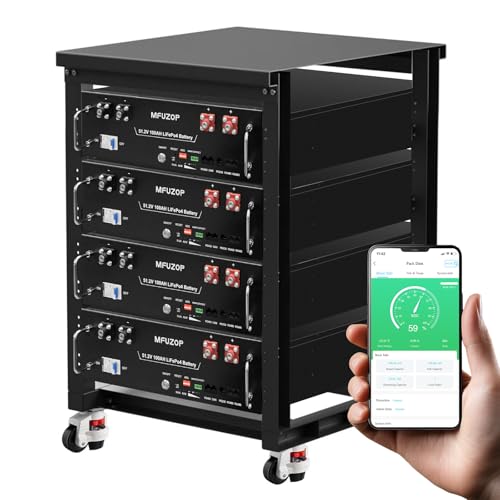
Configure a whole-house storage system with four 48V, 100Ah LiFePO4 modules to deliver about 20.48 kWh of usable capacity. Each unit is engineered for high-cycle life—6,000+ deep cycles—making it suitable for long-term off-grid operation or resilience during extended outages. The system emphasizes safe, balanced charging and stable output under heavy load, supporting critical loads like HVAC and kitchen appliances when grid power is unavailable. A Bluetooth-enabled interface replaces older LCD panels, enabling real-time monitoring of voltage, cell temperature, and state of charge (SOC) for each battery, all accessible from a mobile device. A robust 100A BMS guards against faults and ensures safe operation in demanding environments.
Key features: Whole-house power capacity, 6,000+ deep cycles, Bluetooth monitoring, 100A BMS for balanced charging and protection.
MFUZOP 20.48kWh LiFePO4 Battery Bank — 4 Modules, Higher Voltage

This variant matches the 20.48 kWh capacity with an emphasis on higher nominal voltage and smart management. Like the other MFUZOP option, it uses a 100A BMS to safeguard the system, enabling balanced charging and reliable performance during off-grid operation. The Bluetooth-enabled monitoring app provides real-time data on the system’s health, while the four-module configuration supports scalable storage for future solar expansion. This setup is well-suited for homes seeking a compact yet potent energy reserve with remote monitoring and strong safety features.
Key features: 4 modules, Bluetooth monitoring, robust 100A BMS, scalable design for home solar storage.
Dawnice 51.2V 100Ah LiFePO4 Battery — 20 kWh Stack

Four 51.2V modules combine to deliver up to 20 kWh of usable energy. Dawnice emphasizes a long service life with Grade A cells and up to 6,000+ cycles, promising extended performance relative to lead-acid systems. The modules are designed for stacking and parallel expansion, with a built-in 50A BMS per module to safeguard charging and discharging processes. The chassis is mobile with wheels, aiding installation and relocation within a home or workshop. The modular design supports easy upgrades as energy needs grow.
Key features: 20 kWh stack, Grade A cells, 6,000+ cycles, modular design with per-module BMS protection.
KONFULON Power Bank — 60,000 mAh External Battery
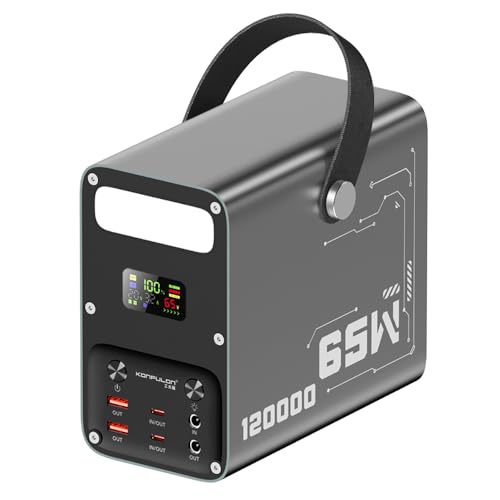
While not a storage bank for home solar, this high-capacity external power unit demonstrates the breadth of 20 kWh-range thinking by offering portable, high-density energy on the go. It features PD 65W fast charging for laptops and multiple outputs for charging devices, along with a built-in display and robust battery management for safe operation. This option is useful for emergencies, camping, or travel where larger portable reserves are desirable before a grid connection is available. Consider it as a portable companion to a larger stationary storage system.
Key features: 60Ah-equivalent capacity in a portable pack, PD 65W fast charging, multiple ports, LCD display for status.
powkey 200W Portable Power Bank With AC Outlet

This 146Wh unit provides a compact, high-output portable solution with a pure sine wave AC outlet and several USB ports. It’s suitable for powering small devices during outdoor activities or emergencies while traveling. It complements larger stationary storage by offering immediate, on-the-go power and can recharge via fast DC input. The device is geared toward temporary, compact energy needs rather than long-term home storage.
Key features: 146Wh capacity, pure sine wave AC outlet, multiple outputs, portable design.
SinKeu 86.58Wh Portable Charger With AC Output
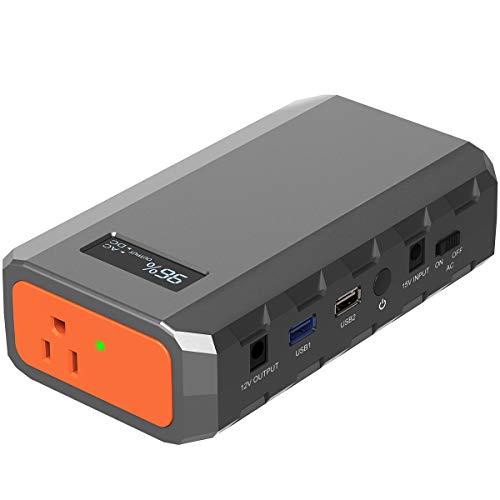
Compact, high-output portable power bank ideal for travel or backup on the go. The SinKeu unit includes a 65W/120V AC outlet and multiple USB ports for charging laptops, tablets, and phones. Its OLED display facilitates easy monitoring of remaining capacity and charging status. Although not a stationary 20 kWh bank, it illustrates how modern LiFePO4 and high-energy-density cells are enabling powerful mobile energy solutions for everyday use, emergencies, and remote work scenarios.
Key features: 120V AC outlet, 65W fast charging, OLED display, portable and versatile for travel.
Aioneus 20,000mAh Portable Charger With Built-In Cables
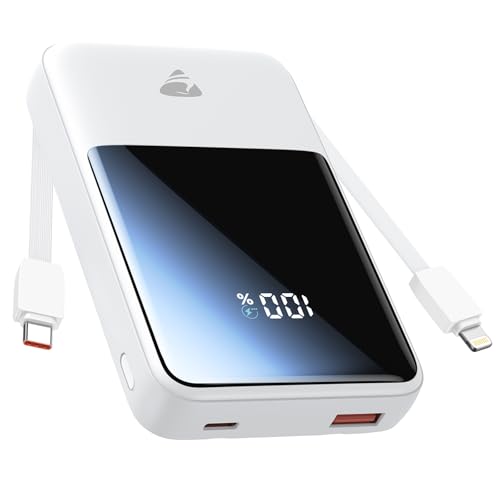
This built-in-cable power bank provides integrated USB-C and Lightning cables, enabling quick recharging and device compatibility. With 20,000mAh capacity and 22.5W PD/QC fast charging, it supports multiple devices simultaneously and is designed for everyday use, travel, and quick top-ups on the go. While not a 20 kWh home storage unit, it demonstrates how high-density LiFePO4 or Li-ion technology fits into compact, user-friendly power solutions for personal electronics and mobile needs.
Key features: Built-in cables, 22.5W fast charging, multi-device capacity, portable and convenient.
Buying Guide: Key Considerations For 20 kWh Battery Banks
- Capacity and scalability: For a 20 kWh target, verify total energy, discharge depth, and how modules can be added over time. Check how many cycles the battery is rated for and how that affects long-term costs.
- Chemistry and safety: LiFePO4 cells offer stable chemistry, long cycle life, and good thermal stability. Confirm a robust BMS with protections for overcharge, over-discharge, over-current, and short circuit, plus cell balancing.
- Voltage configuration and system integration: Consider nominal voltage (48V vs 51.2V) and how it matches your inverter/charging equipment. Ensure compatibility with solar charge controllers, inverters, and any rack or cabinet mounting requirements.
- Monitoring and control: Bluetooth or Wi-Fi monitoring enables remote status checks for voltage, SOC, temperature, and health. Check whether the app supports per-module monitoring and alerts.
- Safety and installation: Look for fire-rated enclosures, safe wiring practices, and installation support for multiple modules. Modular design should allow easy expansion without system downtime.
- Maintenance and service: Review warranty terms, replacement part availability, and vendor support for troubleshooting and firmware updates.
- Cost of ownership: Compare total cost of ownership across configurations, factoring in potential expansion, rack or cabinet needs, and the cost of inverters or solar upgrades if required.
- Portability vs. stationary storage: Distinguish between home storage banks (static, wall-mounted or rack-mounted) and portable power banks intended for travel or emergency kits.
Overall, a 20 kWh LiFePO4 battery bank offers a robust, scalable solution for residential solar storage and outage resilience. When choosing, prioritize long cycle life, a strong BMS, clear monitoring, and compatibility with your existing solar infrastructure. Consider how easily you can expand the system in the future to match growing energy needs.