When off-grid living, RVing, boating, or home backup power is on the line, a 12V inverter with a built-in battery charger can streamline your setup. This article reviews five solid options that pair a pure sine wave inverter with a multi‑stage battery charger, delivering stable AC power while recharging 12V battery banks. Each product is selected for compatibility with LiFePO4 and other common chemistries, UPS capability, and robust protection features. Use the buying guide at the end to compare features, durability, and user scenarios.
| Product | Inverter Power | Charger Current | Battery Type Support | Key Benefit |
|---|---|---|---|---|
| ECO-WORTHY 1000W Inverter Charger | 1000W | 55A | LiFePO4 | UPS with 20ms switch, robust protections |
| ECO-WORTHY 600W Inverter Charger | 600W | 30A | LiFePO4 | Compact 2‑in‑1 with UPS and full protections |
| LANDERPOW 3000W Pure Sine Wave Inverter | 3000W | 30W USB-C + 5V USB | Multiple (per Features) | High continuous power for heavy loads |
| VEVOR 2000W Pure Sine Wave Inverter Charger | 2000W | Not specified in features | Various | Multiple operating modes and wide battery compatibility |
| LiTime 3000W Pure Sine Wave Inverter Charger | 3000W | 5–45A adjustable | LiFePO4, GEL, AGM, SLA, CAL, etc. | UPS with 10ms switch, high surge capacity |
ECO-WORTHY 1000W Inverter Charger

The ECO-WORTHY 1000W Inverter Charger combines a 1000W pure sine wave inverter with a 55A LiFePO4 battery charger in a single unit. It supports 12V to 110V conversion and operates with an automatic UPS switch to battery power within 20 milliseconds during grid disruptions. This ensures a rapid, uninterrupted power supply to connected devices, reducing the risk of damage from brownouts. It features full-system protections including high/low voltage, overload, overcurrent, overtemperature, and short-circuit protection, making it a solid choice for RVs, boats, and small off‑grid setups. The unit is designed for LiFePO4 batteries but has broader compatibility with common 12V chemistries. The built‑in UPS capability makes it particularly suitable for sensitive electronics and home backup scenarios where downtime matters.
Key specs and considerations:
– Inverter: 1000W continuous (2000W peak)
– Charger: 55A for LiFePO4 batteries
– UPS: 20ms auto-switch to battery
– Protections: voltage, current, temperature, short circuit
ECO-WORTHY 600W Inverter Charger
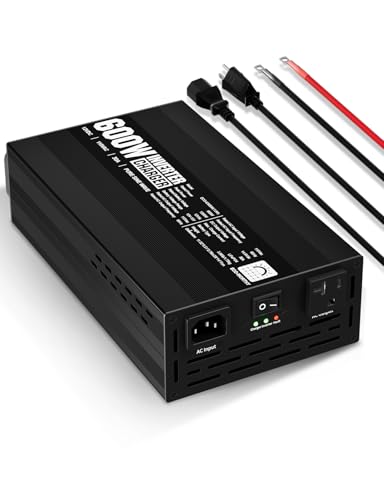
The ECO-WORTHY 600W Inverter Charger provides a compact, dual-function solution with a 600W pure sine wave inverter and a 30A LiFePO4 charger. Its UPS capability ensures crucial loads remain powered during grid outages by automatically switching to battery power within 20 milliseconds. The 2‑in‑1 design emphasizes space efficiency for smaller setups, such as compact RV cabinets or limited‑infrastructure homes. It uses pure sine wave output for smoother operation of electronics and includes multiple protections to guard against common electrical faults. This unit is well-suited to lightweight camping rigs, smaller boats, or as a secondary backup system in a garage or apartment micro-grid arrangement.
Key specs and considerations:
– Inverter: 600W continuous (1200W peak)
– Charger: 30A for LiFePO4
– UPS: 20ms switch
– Protections: standard over/under voltage, overload, overcurrent
LANDERPOW 3000W Pure Sine Wave Inverter

The LANDERPOW 3000W inverter is built for demanding off‑grid scenarios. It delivers 3000W continuous pure sine wave power with a 6000W surge capacity, enabling reliable operation of heavy appliances such as microwaves, air conditioners, and power tools. The unit includes USB-C and USB outputs (5V, 3.1A) in addition to three AC outlets and a hardwired terminal, offering flexible connections for RVs, trucks, and remote homes. It’s designed to guard sensitive electronics and maintain clean AC delivery. The system is compatible with multiple battery types, and the high surge rating makes it well-suited for startup-heavy loads. While it is not explicitly marketed as a UPS, its robust output and multiple connections make it a strong option for full‑time backup or ESS configurations.
Key specs and considerations:
– Inverter: 3000W continuous, 6000W surge
– Outputs: 3 AC outlets + hardwired terminal; USB-C and USB-A
– Battery and load handling: strong startup performance, wide appliance compatibility
– Protection: standard safeguards for safe operation
VEVOR Pure Sine Wave Inverter Charger

The VEVOR 2000W Pure Sine Wave Inverter Charger provides 2000W continuous power with a wide range of battery compatibility, including LiFePO4, lithium-ion, AGM, and various lead-acid chemistries. It offers multiple operating modes to accommodate different off-grid lifestyles, such as Unattended Mode, Grid Priority, and Energy-Saving modes. The wide compatibility and mode versatility make it a flexible choice for RVs, boats, or home backup systems that use different battery chemistries. The unit emphasizes clean sine wave output and protection features to maintain device safety while powering diverse loads, from refrigerators to electronics dashboards.
Key specs and considerations:
– Inverter: 2000W continuous
– Modes: Unattended, Grid Priority, Battery Priority, Energy-Saving, Generator
– Battery compatibility: LiFePO4, Li-ion, AGM, GEL, SLA
– Output: Pure sine wave with protections for safe operation
LiTime 3000W Pure Sine Wave Inverter Charger

The LiTime 3000W inverter charger integrates a 3000W pure sine wave inverter with UPS capability and a wide surge margin up to 9000W. It offers adjustable charging current from 5A to 45A and supports multiple battery chemistries including LiFePO4, GEL, AGM, SLA, CAL, and more. Its UPS switching occurs within 10 milliseconds, ensuring seamless power to critical loads during outages. The unit is suited for RVs, home backup, or off-grid installations where high power, fast UPS switching, and versatile battery compatibility are required. It also emphasizes load handling for refrigerators, coffee machines, and other inductive loads, maintaining stable operation under demanding conditions.
Key specs and considerations:
– Inverter: 3000W continuous, 9000W peak
– UPS: 10ms switching
– Charging: 5–45A adjustable
– Battery compatibility: broad variety of chemistries
Buying Guide: Key Purchase Considerations
When choosing a 12V inverter with a battery charger, several factors determine long-term value and reliability. Consider the following perspectives to select the best fit for your needs:
- Power needs and surge tolerance: Match continuous wattage and surge capacity to your typical loads. Heavy appliances (microwaves, air conditioners) require higher continuous rating and robust surge margins.
- UPS performance: If uninterrupted power is essential for sensitive electronics, prioritize units with fast automatic transfer switching (UPS) and clearly stated transfer times (ideally under 20 ms).
- Battery chemistry compatibility: Ensure the charger supports your battery type (LiFePO4, Li-ion, AGM, GEL, SLA, CAL). LiFePO4 compatibility is common, but verify charging current ranges and termination methods.
- Charging current and efficiency: A higher charging current reduces recharge time for large banks but requires adequate wiring, fusing, and battery acceptance. Consider adjustable charging current if you plan to mix battery chemistries.
- Protection features: Look for comprehensive protections (over/under voltage, overcurrent, overtemperature, short circuit) to protect both inverter hardware and connected devices.
- Connectivity and installation: Check for available outlets, USB ports, and remote control options. Remote monitoring can simplify maintenance and status checks in remote installations.
- System type and expandability: If you anticipate expanding your energy system, choose an inverter charger with higher power (3,000W or more) and flexible battery options to accommodate growth.
- Physical footprint and cooling: Larger inverters require adequate ventilation. Consider mounting space and ambient temperature ranges for continuous operation.
- Warranty and support: A solid warranty with accessible support improves long-term reliability, especially in off-grid environments where service timelines matter.
Bottom line: For RVs, boats, and off-grid homes, a well‑specified 12V inverter charger delivering robust continuous power, fast UPS switching, and broad battery compatibility offers the best balance of performance and resilience. Evaluate your typical loads, battery bank size, and future expansion plans to pick the unit that integrates most cleanly with your energy system.