For homes and apartments that rely on a compact, 120-volt solution, a tankless water heater can deliver instant hot water without the bulk of a traditional tank. This guide highlights several reliable 120V options, focusing on under-sink or point-of-use models that fit small spaces and power-constrained setups. Each entry includes key features, performance notes, and considerations to help you choose a unit that fits your needs and electrical setup.
Summary of chosen products
- MIZUDO Tankless Water Heater Electric, 3.5kW 120V
- ThermoMate 3500W 120V Point of Use Tankless Water Heater
- LECLOC Mini 3kW 120V Under-Sink Tankless Heater
- CAMPLUX 3.5kW 120V Tankless Water Heater
- Ranein 4.5kW 110V Under-Sink Tankless Water Heater
MIZUDO 3.5kW 120V Tankless Water Heater
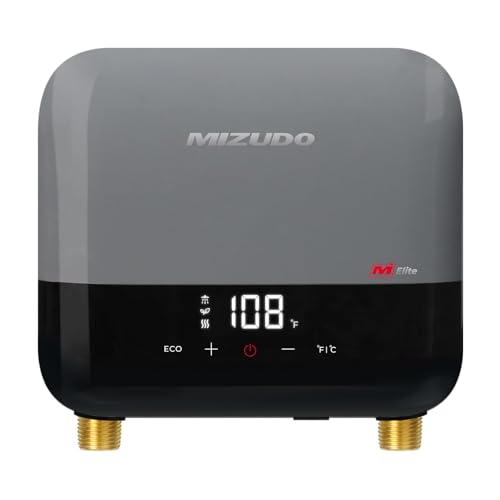
This ultra-slim electric tankless heater delivers on-demand hot water with no storage tank. Its compact design (6.9×8.1×2.5 inches) makes under-sink installation straightforward, ideal for small kitchens or bathrooms. The LED digital display shows real-time temperature while a stabilization technology maintains consistent output. Suitable for quick handwashing or dish rinsing, it’s a practical option when space is limited and you need immediate hot water.
ThermoMate 3500W 120V Point of Use Tankless Water Heater

Designed for single-sink use, this ThermoMate model heats instantly with a 3500W element and a temperature range from 86°F to 131°F. The self-modulating design optimizes energy use, with efficiency around 99.8%. A robust disconnect between the heating element and water line helps minimize scale buildup, prolonging life in low-flow environments. Note that 120V operation typically requires hard-wiring, which is a consideration for some installations.
LECLOC 3kW 120V Mini Under Sink Heater

Note: This model is intended for low-flow use and not suitable for showers or multiple taps simultaneously. It features an enlarged LED display with a single knob for temperature control and multi-protection measures, including leakage and overheat protections, IPX4 waterproofing, and automatic fault diagnosis. For higher demand, the manufacturer suggests considering a higher wattage 240V model and professional electrical work.
CAMPLUX Tankless Water Heater 3.5kW 120V

CAMPLUX offers a compact, self-modulating unit designed for quick hot water at a single sink. It heats water in about 3 seconds with a modest rise in temperature and emphasizes energy savings through real-time power adjustment. The small footprint makes it versatile for tight spaces, wet bars, or under-sink installations. Suitable for one point of use, it provides a practical balance of speed, efficiency, and space savings.
Ranein 4.5 kW 110V Under-Sink Tankless Heater

Ranein’s 4.5 kW model operates at 110–120V with a compact footprint suitable for under-sink installation. It’s designed for instant hot water with a preset temperature, featuring CSA certification and an LED display. The unit includes multiple safety protections, such as overheat and dry-fire protections, as well as anti-freeze and high-pressure safeguards. A stainless steel heating element helps reduce mineral buildup and sediment over time.
Buying Guide: Key Considerations for 120V Tankless Heaters
When choosing a 120V tankless water heater, consider the following factors to ensure reliable performance and safety in residential settings.
- Flow rate and hot water needs: Most 120V units are designed for point-of-use or single-tap use. Check the maximum flow rate (GPM) and how it maps to your typical demands, such as a sink or small bathroom faucet.
- Power and electrical requirements: Many models are 3500W, 3000W, or 4500W. Ensure your circuit can handle the draw; some units require hard-wiring and dedicated circuits, especially at higher wattages.
- Temperature range and stability: Look for models with adjustable temperature settings and stable output to prevent scalding or cold water surges during use.
- Protection features: Safety protections like leakage, overheat, dry combustion, IPX ratings, and anti-freeze protections help prevent damage in real-world use. CSA/ETL certifications indicate compliance with safety standards.
- Installation considerations: Under-sink or cabinet installations require appropriate space, plumbing access, and electrical wiring. Check if the unit is plug-in or hardwired, and whether a professional installation is advisable.
- Size and durability: Compact dimensions are a major advantage for 120V units. Materials such as SUS 304 stainless steel elements can improve longevity and reduce mineral buildup.
- Maintenance needs: Some units are designed for easier descaling and reduced mineral buildup. Consider your local water hardness and maintenance tolerance.
- Warranty and support: Longer warranties and responsive customer support can offset higher upfront costs and potential service calls.
Performance Comparisons Across Models
Across the selected models, users typically weigh compact size, ease of installation, and the ability to deliver enough hot water for a single faucet or sink. The MIZUDO and CAMPLUX units emphasize ultra-compact form factors and quick hot water at modest flow rates, suitable for individual sinks. The ThermoMate and Ranein options provide higher wattage within 120V constraints, offering faster heating for higher-demand scenarios but may require careful electrical planning. Lecloc’s 3kW model prioritizes safety features and user-friendly controls, while noting its limitations for multi-point use. In all cases, proper sizing to your actual hot water needs is essential.
Additional Considerations and Use Cases
For apartments with limited space, a 120V tankless heater installed under the sink can free up cabinet space and reduce standby energy compared to a traditional tank. If your home’s electrical system is older or you have multiple outlets on the same circuit, select a unit with a lower wattage or plan a dedicated circuit. If you need hot water at multiple fixtures, a higher-wattage model or a 240V installation might be more appropriate. Always verify compatibility with your plumbing layout and electrical panel before purchase.
Choosing the right 120V tankless water heater involves balancing space, demand, and electrical capabilities. By comparing compact units designed for point-of-use with attention to flow rates and safety features, you can select a model that delivers reliable hot water where you need it without the burden of a full-size water heater.