Choosing a 12 volt solar fence charger involves balancing range, energy output, and reliability. This guide highlights five top solar-powered fences energizers, detailing each unit’s strengths and typical use cases. Whether you need wide pasture coverage or dependable day/night operation, these chargers help protect livestock, deter predators, and simplify grazing management.
| Product | Brand | Approx. Range | Output Energy | Notes |
|---|---|---|---|---|
| Parmak Magnum Solar-Pak 12 | Parmak | Up to 30 miles | 3.1+ joules | Low impedance, battery-powered at night |
| Andmon MINI400 | ANDMON | Up to 20 miles | 0.3 joule | Day/Night mode, 14 days without sun |
| 10 Miles Solar Fence Charger with Day/Night Mode | ANDMON | Up to 10 miles | 0.11 joule | Portable, built-in solar panel |
| 24 Hour Solar Electric Fence Charger | Epoify | Up to 10 miles | 0.18 joule | Rechargeable solar panel, all-in-one design |
| FarmNix 24 Hour Solar Fence Charger | FarmNix | Up to 30 miles | 1.5 joules | IP65 waterproof, adjustable output |
Note: All products above are suitable for a range of livestock protection needs, including cattle, horses, sheep, goats, and poultry. Each unit uses solar energy to keep your fence charged day and night, reducing the need for frequent battery changes or AC power access in remote pastures.
Parmak Magnum Solar-Pak 12 Review

The Parmak Magnum Solar-Pak 12 combines solar charging by day with a sealed 12-volt battery for night operation. It includes a battery and uses low impedance technology to maximize power and longevity. This model is designed to cover up to 30 miles of fence with a 3.1+ joule output, making it suitable for larger pastures. Its dual-source power approach reduces the risk of power loss during cloudy periods.
Features to note include the low impedance design for maximum power transfer, a robust 12-volt battery system, and a generous fencing range. It’s a practical choice for permanent fence lines where reliability and long-term performance are priorities. Regular maintenance includes battery checks and ensuring the solar panel is clean and properly angled for optimal sun exposure.
Andmon MINI400 Solar Fence Charger

The Andmon MINI400 provides a compact solar energizer with day/night mode and a 0.3 joule output, energizing up to 20 miles of fence. It uses an 18.5V solar panel paired with a 12V sealed lead acid battery, enabling operation for up to 14 days without sun. The unit is designed for high reliability in extreme temperatures from -20°C to 80°C, making it suitable for varied climates. It’s ideal for smaller to mid-sized pastures requiring dependable off-grid power.
Operational highlights include straightforward setup, a relatively lightweight form factor, and a focus on long daylight-to-night power continuity. It’s important to monitor battery health and ensure proper enclosure protection in harsh weather to preserve performance over time.
Andmon 10 Miles Solar Fence Charger

This 10 Miles Solar Fence Charger emphasizes portability with a built-in solar panel and an internal gel battery. It’s built to provide 24-hour protection and is described as compact, tough, and easy to mount. It energizes up to 2 miles of fence, making it a practical choice for small paddocks or seasonal grazing setups where mobility is important. The device is designed for quick deployment and straightforward maintenance in field conditions.
Consider its suitability for environments with fluctuating sun exposure. While it covers a smaller distance, its portability and robust design can be a decisive factor for temporary fencing or rotating pastures where power access is limited.
Epoify 24 Hour Solar Electric Fence Charger
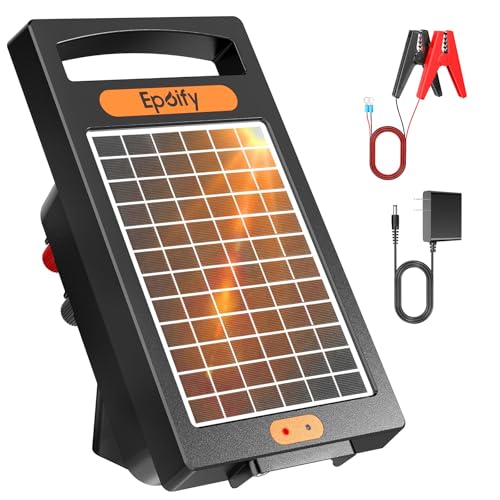
The Epoify 24 Hour Solar Electric Fence Charger offers 10 miles of coverage with a 0.18 joule output. It features a rechargeable solar panel for continuous operation and is marketed for livestock and predator protection. Its all-in-one design integrates a solar panel with a battery system, reducing the need for external power sources. The unit supports 24-hour operation, even in low-light conditions, making it suitable for remote pastures where sun exposure varies seasonally.
Key considerations include the balance between range and energy output, the quality of the solar panel under local weather patterns, and the enclosure’s weather sealing. Users should plan for regular cleaning of solar panels and verification of battery health to maximize uptime.
FarmNix 24 Hour Solar Fence Charger

The FarmNix 24 Hour Solar Fence Charger provides up to 30 miles of fencing with adjustable output power, offering a 0.3/0.8/1.1/1.5 joules range and a voltage capability from 6KV to 12KV. It uses a 15W solar panel and a 12V 7Ah sealed lead-acid battery. Built to withstand harsh weather, the unit features IP65 waterproofing and is designed for long-term outdoor use in varying climates. This charger suits larger pastures that require higher energy pulses for effective deterrence.
Users should evaluate the need for higher voltage settings vs. battery life, the installation environment, and whether the IP65 rating aligns with local weather exposure. The product’s multi-level energy output provides flexibility for different animal types and grazing setups.
Buying Guide: Key Considerations for 12 Volt Solar Fence Chargers
- Range vs. energy: Higher miles coverage generally means more sophisticated circuitry and larger batteries. Match range to pasture size and stock density.
- Energy output: Measured in joules, this determines how strongly the fence pulses. More joules are useful for larger or more stubborn animals, but can reduce battery life if not managed.
- Power source reliability: Solar panel quality, panel orientation, and battery type (sealed lead-acid vs. lithium) affect performance during cloudy days or winter.
- Weather resistance: Look for IP ratings and robust housings to protect electronics from rain, dust, and temperature extremes.
- Portability: For rotating pastures or temporary setups, consider units with built-in panels and light weight for easy relocation.
- Ease of installation: Quick mounting, simple wiring, and clear indicators help ensure proper setup and ongoing maintenance.
- Maintenance needs: Battery life, panel cleaning, and occasional component checks should be factored into long-term costs and downtime.
- Warranty and support: Check manufacturer warranties and availability of replacement parts or service in your region.
- Safety and compliance: Ensure the fencing system complies with local regulations and is installed safely around people and pets.
In selecting a 12 volt solar fence charger, align the device’s capabilities with your livestock, pasture layout, and climate. Prioritize reliability and energy efficiency to maintain continuous protection with minimal maintenance. The right charger supports steady animal control, reduces grazing losses, and provides a practical off-grid fencing solution for American farms and homesteads.