Answering the need for reliable 100 amp 3-phase solutions, this guide highlights five practical options for different installation contexts—from main breaker load centers to safety switches. The focus is on suitability for commercial, workshop, and small industrial setups where 3-phase power is essential. Each product is evaluated for best-use scenarios, with clear pros, limitations, and who should consider it. Use these summaries to compare installation types, space requirements, and compatibility with common 3-phase breakers.
Product Comparison Snapshot
| Product | Type | Best For | Key Benefit |
|---|---|---|---|
| P3042B3100CU 100-Amp 30-Space 42-Circuit 3-Phase Main Breaker Load Center | Main Breaker Load Center | Small business or workshop needing a 3-phase panel with easy wiring | Siemens Insta-wire technology for quick installation |
| QOB3100 SQUARE D Circuit Breaker (QOB) 100A 3-Pole | Panel replacements or upgrades requiring bolt-on 3-phase breakers | Compact 3-pole 100A option | |
| S1224L3125 125-Amp Indoor Main Lug 12 Space, 24 Circuit 3-Phase | Main Lug Load Center | Indoor, space-conscious 3-phase distribution | Lightweight, flexible lug-based configuration |
| Siemens HNF363R 100-Amp 3 Pole 600-volt Safety Switch | Non-fused, heavy-duty isolation and protection | Quick-make/quick-break mechanism | |
| Siemens S2442L3200 200-Amp Indoor Main Lug 42-Circuit 3-Phase | Higher capacity 3-phase indoor installations | Versatile for larger 3-phase circuits |
P3042B3100CU 100-Amp 30-Space 42-Circuit 3-Phase Main Breaker Load Center

Best for: Small-to-mid sized 3-phase facilities needing a robust main breaker load center with ample spaces. The 30 spaces/42 circuits support flexible circuit planning for evolving electrical needs. This Siemens panel features patented insta-wire technology for faster wire insertion, reducing installation time and labor. The copper bus enhances conductivity and durability, suitable for steady 3-phase distribution.
Limitations: While excellent for installation speed, the unit’s larger footprint may require wall clearance planning. Ensure compatibility with your main service and local code requirements.
QOB3100 SQUARE D Circuit Breaker (QOB) Standard, 100A, 3-Pole

Best for: Replacing or expanding a panel that already uses bolt-on 3-pole breakers. The 100A, 3-phase configuration fits standard electrical layouts in industrial or commercial settings. The bolt-on style can be advantageous in certain retrofit projects where plug-in breakers are not preferred.
Limitations: Bolt-on breakers require appropriate mounting hardware and space. Verify compatibility with your existing bus arrangement and panel model before purchasing.
S2442L3200 200-Amp Indoor Main Lug 42 Space, 60 Circuit 3-Phase
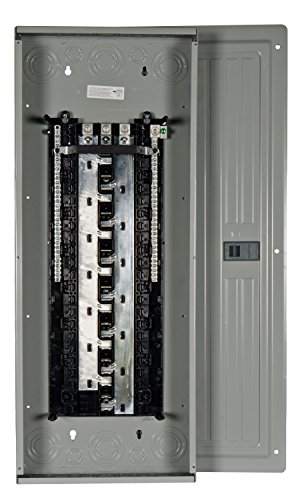
Best for: Indoor installations needing higher capacity in a 3-phase setup. Although rated at 200A, its 42-space/60-circuit layout offers future expansion while maintaining main-lug flexibility. This Siemens option is UL Listed and supports plug-in breakers from compatible Siemens or Murray lines.
Limitations: Higher amperage means larger bus and enclosure; check available 공간 and service capacity to avoid overloading.
Siemens SW2442L3200 200-Amp Outdoor Main Lug 42-Circuit 3-Phase

Best for: Outdoor outdoor-rated 3-phase distribution with main-lug design and substantial circuit capacity. The enclosure is built for harsh environments and supports plug-in style Siemens or Murray breakers. This option suits facilities facing weather exposure or needing outdoor installation.
Limitations: Outdoor units require weatherproofing compliance and appropriate environmental protection measures in installation planning.
Buying Guide
What amperage and phase configuration do you actually need?
100-amp 3-phase panels are ideal where small-to-medium commercial loads or workshops operate on three-phase power. Confirm the main service rating and desired maximum branch circuit count. If growth is expected, choose a panel with more spaces or a main lug design for easier expansion.
Indoor vs. outdoor installation requirements
Indoor panels are typically lighter with simpler mounting. Outdoor units require weatherproof enclosures and may include corrosion-resistant materials. If exposure to elements is a factor, prioritize NEMA-rated enclosures and UL listings appropriate for outdoor use.
Breaker type and compatibility
Check whether the panel accepts plug-in style breakers or requires bolt-on units. Ensure the breakers you plan to use are compatible with the panel’s bus and listing. Compatibility reduces troubleshooting and simplifies future upgrades.
Space and circuit count considerations
Consider both current and future needs. A panel with 42 circuits provides room for expansion, while fewer spaces may force early additional enclosures. A main breaker design offers centralized protection; main lug options offer flexibility for future breakers.
Installation time and Labor
Features like Siemens Insta-wire can shorten wiring time by pre-backed-out ground and neutral screws. Evaluate whether your team benefits from faster install options or prefers bolt-on methods for specific applications.
Safety and compliance considerations
All listed products are designed for standard 3-phase service; ensure electrical permits, wiring methods, and clearances comply with local codes. For outdoor equipment, weatherproofing and secure mounting are essential for long-term safety.
Accessibility and maintenance
Look for panels with clearly labeled spaces and modular designs to simplify routine maintenance and future troubleshooting. Accessible wiring paths and robust bus bars contribute to reliable service over time.
FAQ
- What is a 3-phase 100-amp panel best used for? It serves small commercial, workshop, or light-industrial loads where three-phase power is needed with a 100-amp main capacity.
- Can I mix 3-phase panels with different brand breakers? Compatibility depends on the panel’s listing. Use breakers designed for the specific panel model or listed as interchangeable by the manufacturer.
- Is an outdoor 3-phase panel worth it for a small facility? If the installation is outdoors or exposed to weather, outdoor-rated panels provide protection and durability, though enclosure requirements must be planned.
- What should I consider before upgrading to a 3-phase system? Assess current and projected loads, available service, space, and compliance requirements. Plan for future expansion where possible.
- Do main breaker panels offer easier protection? Yes, main breakers centralize protection and simplify shutting off power for servicing, which can improve safety and maintenance workflows.
- Are 100A 3-phase solutions cost-effective for small shops? For facilities with consistent 3-phase loads, these panels provide scalable distribution and organized wiring, balancing upfront costs with long-term reliability.